Carriage Repair Workshop, East Coast Railway
- Carriage Repair Workshop, East Coast Railway
- Chapter 1 – The Beginning of a Quality and Sustainability Journey
- Chapter 2 – Strengthening the Workshop Environment
- Chapter 3 – Energy Conservation and Operational Awareness
- Chapter 4 – Water Management and Responsible Resource Utilization
- Chapter 5 – Waste Management and Better Material Utilization
- Chapter 6 – Employee Participation and Workplace Culture
- Chapter 7 – Linking Sustainability with Quality and Operational Excellence
- Chapter 8 – Building a Culture of Continuous Improvement
- Chapter 9 – The Role of Certification in Institutional Growth
- Chapter 10 – Looking Toward a Sustainable Future
- Take the Next Step Today
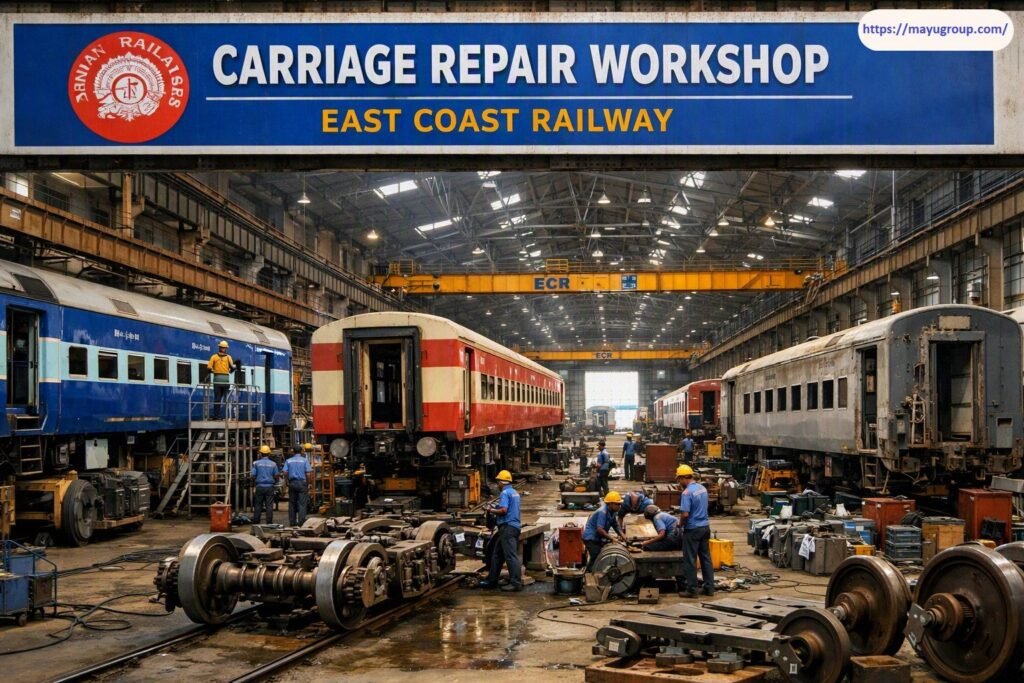
Chapter 1 – The Beginning of a Quality and Sustainability Journey
Carriage Repair Workshop, East Coast Railway, located at Mancheswar, Bhubaneswar – 751017, represents an important part of the railway maintenance ecosystem. Behind every safe and dependable railway journey is a large network of engineering, maintenance, inspection and support activities. Railway workshops are among the places where this responsibility becomes visible every day. Coaches and railway assets require systematic inspection, repair, maintenance and attention to operational requirements so that railway services can continue effectively.
Within this environment, Carriage Repair Workshop began an important journey toward strengthening its approach to environmental responsibility and organized workplace practices. The journey associated with the Green Company (Green Co.) Rating System brought a structured sustainability perspective into the workshop’s operational environment. The recognition associated with GGBC – Green Global Building Council, with an issue date of 2022 and validity through 2025, became an important milestone in this journey.
For an organization involved in railway maintenance, sustainability is closely connected with everyday operations. A workshop consumes energy, water, materials and other resources. It also generates different types of waste during maintenance and repair activities. Therefore, environmental performance cannot be separated completely from operational performance. The way machines are maintained, materials are stored, equipment is operated and waste is handled can influence both workplace efficiency and environmental responsibility.
The Green Company approach provided an opportunity to look at these activities from a broader perspective. Instead of considering environmental improvement as a separate programme, the workshop could connect it with existing practices of maintenance, safety, housekeeping, resource utilization and employee responsibility.
The beginning of this journey was based on awareness. Employees working in different areas of the workshop could recognize that even routine activities had an environmental dimension. Switching off equipment when it was not required, avoiding unnecessary consumption of materials, preventing water wastage, maintaining clean work areas and properly managing waste were all practical examples of responsible workplace behavior.
Such practices may appear small when considered individually. However, in a large and continuously operating workshop, repeated actions by many employees can have a significant cumulative effect. This understanding helped establish a foundation for sustainability.
The certification and recognition process also encouraged a more systematic approach to improvement. A formal rating system requires an organization to examine its existing practices and identify areas where performance can be strengthened. This creates an opportunity for management and employees to look at familiar activities from a new perspective.
For Carriage Repair Workshop, this meant recognizing that quality and environmental responsibility could support one another. Proper maintenance of equipment can improve reliability while potentially reducing unnecessary energy consumption. Better organization of materials can reduce damage and avoid unnecessary waste. Effective housekeeping can improve workplace safety while also contributing to a cleaner environment. Preventive maintenance can support operational continuity while helping avoid premature replacement of equipment and components.
This broader understanding of sustainability gradually becomes part of organizational culture.
The role of employees was particularly important. A certification programme cannot become meaningful through documentation alone. Its effectiveness depends on how practices are understood and followed by people working on the ground. Technicians, supervisors, engineers, administrative employees and other members of the workforce all have different responsibilities, but their actions collectively influence workshop performance.
Awareness therefore became an important element of the journey. Employees could be encouraged to observe their work areas, identify avoidable wastage and suggest practical improvements. Supervisors could reinforce good practices through regular observation and communication. Management could provide direction and resources for implementing improvement initiatives.
The 2022 recognition represented a point at which these efforts could be formally acknowledged. The certificate became a visible representation of the workshop’s commitment to green practices and organized environmental management. More importantly, however, the process behind the recognition helped create a framework for continued improvement.
The journey also reflected a changing understanding of organizational growth. Growth does not necessarily mean only increasing physical infrastructure or expanding the size of an organization. In a railway workshop, growth can also mean improving systems, strengthening employee awareness, reducing unnecessary resource consumption, improving workplace organization and developing a stronger culture of responsibility.
This perspective was particularly relevant to Carriage Repair Workshop. Its primary responsibility remained connected with railway maintenance, but the way that responsibility was carried out could continue evolving.
The Green Co. journey therefore became part of a larger story of operational development. It encouraged the workshop to consider how engineering efficiency, environmental responsibility and workplace discipline could work together.
From Mancheswar in Bhubaneswar, the journey represented more than a certification milestone. It represented an opportunity to build a culture in which every resource mattered, every process could be reviewed and every employee could contribute to improvement.
The period from 2022 to 2025 provided an important chapter in this development. The recognition offered a structured benchmark, while the practices and awareness developed through the process could continue beyond the formal validity period.
The story of Carriage Repair Workshop is therefore not simply about receiving a certificate. It is about the beginning of a continuous journey toward responsible resource utilization, better workplace practices, environmental awareness and operational excellence. The foundation created during this period provided a platform on which future improvements could be built, linking the workshop’s engineering responsibilities with the wider objective of sustainable development.
#CarriageRepairWorkshop
Chapter 2 – Strengthening the Workshop Environment
The journey toward sustainability at Carriage Repair Workshop, East Coast Railway, Mancheswar, Bhubaneswar, did not end with the recognition associated with the Green Company (Green Co.) Rating System. In many ways, the certification period created a new beginning. Once an organization starts examining its environmental and operational practices systematically, attention naturally moves toward the workplace itself. The physical environment of a workshop has a direct relationship with safety, productivity, employee confidence, maintenance efficiency and resource utilization.
A carriage repair workshop is a complex working environment. Different maintenance activities require tools, machines, components, spare parts, electrical equipment, mechanical systems, consumables and supporting infrastructure. These resources must be available when required, but they also need to be stored, maintained and handled properly. When workplace organization is weak, employees may spend additional time searching for tools or materials, unnecessary movement may increase, usable components may become difficult to identify, and housekeeping can become more challenging.
The Green Co. journey encouraged greater attention to these practical aspects of workplace management. The objective was not simply to make the workshop look cleaner. A well-managed workplace supports better operations because employees can understand where resources are located, identify abnormalities more easily and maintain safer working conditions.
One of the important principles was the elimination of unnecessary items. Over time, workshops can accumulate old materials, damaged components, unused equipment, packaging and other items. Some may have operational value, while others may no longer be required. Systematic identification and segregation can help prevent unnecessary accumulation.
This type of workplace organization also supports environmental objectives. Materials that are not required can occupy valuable space and may eventually become waste. By identifying materials appropriately, the organization can improve storage, reuse suitable resources where permitted and send recyclable or unusable materials through appropriate disposal channels.
Housekeeping became another important element of the improvement culture. Clean working areas can help employees identify leaks, damage, spills or other abnormalities more quickly. A clean workplace can also reduce obstacles and support safer movement around machinery and workstations.
For employees, these improvements can create a stronger sense of ownership. When people see that their work environment is organized and maintained systematically, they are more likely to participate in maintaining those standards. Workplace discipline can therefore become a shared responsibility rather than something imposed only by supervisors.
The certification and recognition period also encouraged the idea that environmental performance begins with everyday decisions. An employee placing a tool in its designated location, a supervisor ensuring that a work area is maintained properly, or a maintenance team identifying a damaged facility can each contribute to better overall performance.
Visual management can further strengthen this approach. Clearly identified storage areas, labels, signs, instructions and designated locations can make workplace information easier to understand. Such practices are particularly useful in a large workshop where employees may work across different sections and activities.
The connection between workplace organization and productivity is also important. Time lost because of misplaced materials, unclear storage arrangements or unnecessary movement can affect the efficiency of maintenance activities. By organizing the workplace logically, employees can spend more time on their primary technical responsibilities.
Safety also becomes an integral part of this improvement. Walkways, work areas, storage locations and equipment surroundings require attention so that employees can perform their duties safely. Good housekeeping can support the identification and correction of potential hazards before they develop into more serious problems.
Another important change was the growing recognition that environmental management should involve every level of the organization. Management can establish objectives and provide resources, but employees working directly in maintenance areas are essential to implementation. They understand practical challenges and can often identify simple improvements that may otherwise remain unnoticed.
The Green Company framework helped connect these activities with a larger sustainability objective. Waste reduction, resource conservation, workplace organization and employee awareness were no longer isolated topics. They could be viewed as parts of one integrated system.
For Carriage Repair Workshop, this approach helped establish a stronger foundation for continuous improvement. The recognition associated with GGBC – Green Global Building Council, issued in 2022 and valid through 2025, provided an important period for strengthening awareness and maintaining focus on sustainable workplace practices.
The workshop’s development during this period can therefore be understood not simply through infrastructure or equipment, but through improvements in systems and behavior. A more organized workplace supports better maintenance. Better maintenance supports reliability. Responsible resource utilization supports environmental performance. Employee participation supports continuity.
These connections demonstrate why workplace improvement is such an important part of a certification journey.
As the workshop continued its operations at Mancheswar, the lessons from the Green Co. approach became part of a broader organizational mindset. Employees could increasingly understand that sustainability was not a separate activity carried out only for certification purposes. It was connected with the way work was performed every day.
The result was a stronger foundation for future improvement. By focusing attention on workplace organization, housekeeping, material management, safety awareness and employee participation, Carriage Repair Workshop could strengthen the environment in which its technical activities were performed.
This chapter of the journey demonstrated an important principle: meaningful sustainability begins where people work. When the workplace becomes more organized, responsible and resource-conscious, the benefits can extend beyond appearance. They can influence efficiency, safety, quality, employee involvement and long-term operational performance.
For Carriage Repair Workshop, strengthening the workshop environment was therefore an essential step in transforming certification awareness into practical and continuing improvement.
#EastCoastRailway
Chapter 3 – Energy Conservation and Operational Awareness
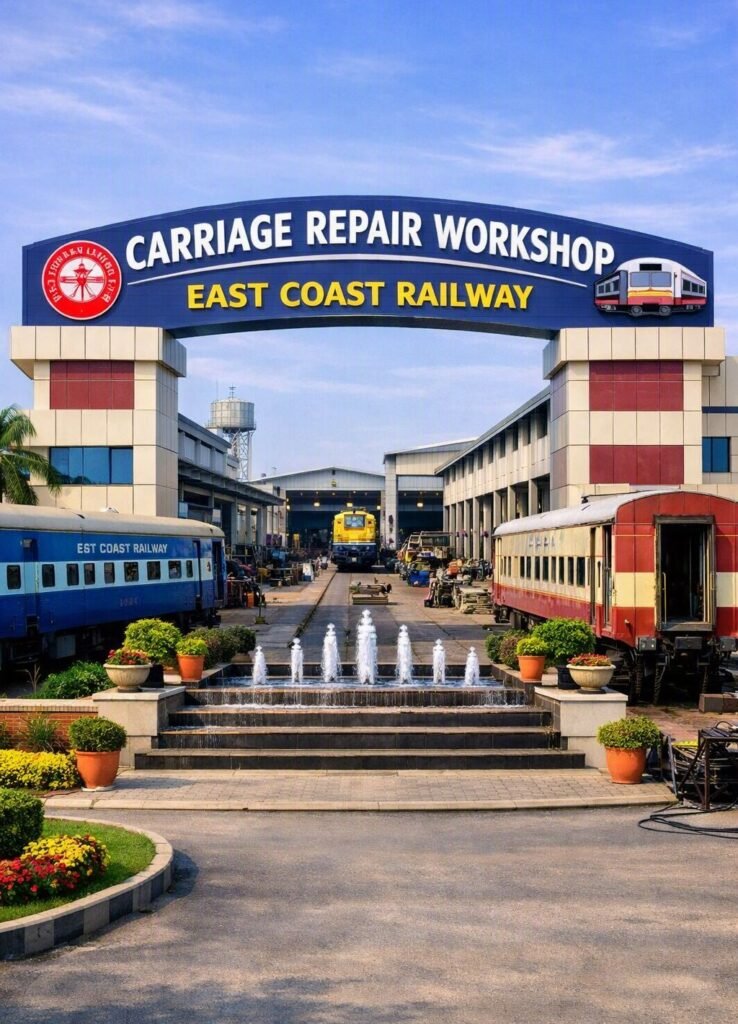
Energy is one of the most important resources in a large engineering and maintenance environment. At Carriage Repair Workshop, East Coast Railway, Mancheswar, Bhubaneswar, a wide range of activities depend on electrical and other forms of energy. Workshop machinery, lighting, ventilation, testing equipment, office facilities and maintenance systems all require energy to support day-to-day operations. As the workshop progressed through its Green Company (Green Co.) journey, energy conservation became an important part of the broader discussion about responsible resource management.
The Green Co. Rating System encouraged the organization to look at energy not only as a basic operational requirement but also as a resource that needed to be used carefully. This perspective created an opportunity to connect environmental responsibility with engineering discipline.
The first step toward energy conservation is awareness. Employees need to understand where energy is being consumed and why unnecessary consumption should be avoided. A machine that remains switched on without a work requirement, lighting operating in an unoccupied area, or equipment functioning inefficiently can represent avoidable resource consumption. Individually, such instances may appear small, but repeated across a large workshop they can become significant.
The certification journey helped strengthen attention toward such everyday practices. Employees could be encouraged to switch off equipment when appropriate, use lighting responsibly and report abnormal operating conditions. Supervisors could reinforce these practices through regular observation and communication.
Energy efficiency also has a strong connection with preventive maintenance. Equipment that is properly maintained can operate more effectively and reliably. Mechanical problems, electrical faults, worn components or poor operating conditions can sometimes result in inefficient performance. Regular inspection and timely maintenance therefore support both operational reliability and responsible energy utilization.
For a railway workshop, this connection is especially relevant. Maintenance activities must be carried out according to established technical requirements, and equipment needs to remain available for the work for which it is intended. Energy conservation cannot compromise technical quality or safety. Instead, the objective is to achieve the required operational result while avoiding unnecessary consumption.
This created a more mature understanding of sustainability. Energy conservation was not about simply reducing usage at any cost. It was about using energy intelligently.
Lighting was another area where awareness could make a difference. Workshop areas can be extensive, and different sections may have different operating schedules and requirements. Appropriate lighting practices, maintenance of lighting systems and responsible switching can contribute to efficient energy use.
Employees also play an important role in identifying opportunities for improvement. People who operate machines and work in particular areas every day are often the first to notice equipment that behaves differently, lights that remain unnecessarily active or systems that require maintenance. Encouraging employees to report such observations can create a practical feedback mechanism.
This approach supports a culture in which energy management becomes everyone’s responsibility.
The 2022 Green Co. recognition associated with GGBC – Green Global Building Council provided an important milestone for this process. With the recognition valid through 2025, the period created an opportunity to strengthen awareness and maintain attention on sustainability-related practices.
The significance of this period extended beyond formal assessment. Certification-related activities can encourage organizations to document existing practices, review their effectiveness and identify opportunities for improvement. This systematic approach is useful because energy conservation is most effective when it becomes measurable and continuous rather than dependent on occasional campaigns.
Operational awareness also became increasingly important. Employees could understand that energy efficiency was connected with the way equipment was operated, maintained and monitored. Proper operating procedures, preventive maintenance and employee discipline can work together to reduce avoidable consumption.
Another important benefit was the connection between energy management and organizational culture. When employees understand the reasons behind a particular practice, compliance becomes more meaningful. Instead of switching off equipment simply because a rule says so, employees can understand that responsible energy use contributes to environmental performance and efficient management of resources.
Management support remains essential in this process. Clear responsibilities, appropriate maintenance planning, awareness activities and monitoring systems can provide employees with the structure needed to implement energy-saving practices consistently.
The workshop’s energy journey also contributed to a wider philosophy of continuous improvement. Once employees begin looking at energy consumption carefully, they can start identifying other areas where resources may be used more efficiently. This can lead to discussions about water, materials, waste, transportation, equipment maintenance and workplace infrastructure.
Thus, energy conservation became a gateway to broader environmental awareness.
For Carriage Repair Workshop, the importance of energy management was therefore not limited to electricity consumption. It represented a change in the way resources were viewed. Energy became something that needed to be planned, monitored, maintained and used responsibly.
The experience also reinforced the relationship between technical work and environmental responsibility. A railway workshop has a primary engineering role, but the quality of that role can be strengthened when operations are performed with awareness of resource consumption and environmental impact.
As the workshop continued its activities at Mancheswar, these principles provided a foundation for further improvement. Employees could contribute through responsible equipment operation, timely reporting of abnormalities, preventive maintenance and everyday energy-conscious behavior.
The Green Co. journey showed that sustainability can be built through many practical actions. Energy conservation does not always require dramatic changes. It can begin with awareness, discipline and consistent attention to the way resources are used.
For Carriage Repair Workshop, this became another important chapter in its broader journey toward operational excellence. The combination of engineering knowledge, employee participation, maintenance discipline and environmental awareness created a foundation for continued improvement.
Ultimately, energy conservation became more than an environmental objective. It became part of responsible workshop management. By recognizing the importance of every unit of energy consumed and every opportunity to avoid unnecessary usage, the workshop could strengthen its commitment to efficient, sustainable and disciplined operations.
#Mancheswar
Chapter 4 – Water Management and Responsible Resource Utilization
Water is one of the most valuable natural resources, and responsible water management is an important component of sustainable industrial operations. At Carriage Repair Workshop, East Coast Railway, Mancheswar, Bhubaneswar, water supports various workplace activities and contributes to maintaining a functional, hygienic and productive environment. As the workshop progressed through its Green Company (Green Co.) journey, water conservation became an important part of its broader approach toward responsible resource utilization.
The Green Co. Rating System encouraged a systematic understanding of how natural resources are consumed within an organization. Water management is not limited to reducing consumption. It also involves preventing avoidable wastage, maintaining water-related infrastructure, creating awareness among employees and using water appropriately for different activities.
For a large railway workshop, these principles are particularly relevant because many activities take place across different sections and facilities. Water may be required for cleaning, housekeeping, sanitation and other operational requirements. Responsible use therefore depends on both infrastructure and employee behavior.
One of the first steps in effective water management is awareness. Employees need to understand that water should be used only as required and that unnecessary consumption should be avoided. A running tap, leaking pipeline or damaged fitting can result in wastage even when the underlying problem appears minor. Regular observation and timely reporting can help prevent such losses.
Maintenance personnel and supervisors can play an important role by ensuring that water-related infrastructure remains in proper condition. Leaks, damaged fittings or other abnormalities can be identified during routine inspections. Prompt attention to such issues can help maintain efficient resource use while also preventing larger maintenance problems.
Housekeeping activities provide another opportunity to encourage responsible water use. Cleaning is necessary for maintaining a healthy and organized workplace, but cleaning practices can be planned so that water is used efficiently. Employees can be encouraged to use appropriate quantities and avoid unnecessary running water.
The same principle applies to sanitation facilities. Proper maintenance and awareness can help prevent wastage and ensure that water systems remain functional. Simple practices, when followed consistently by a large workforce, can contribute to responsible consumption.
The certification journey provided an opportunity to connect these everyday activities with the wider objectives of environmental management. Rather than considering water conservation as a separate campaign, the workshop could integrate it into normal workplace practices.
This integration was important because sustainable performance depends on consistency. A temporary awareness campaign may create short-term attention, but lasting improvement requires employees to incorporate responsible behavior into their regular routines.
The 2022 Green Co. recognition associated with GGBC – Green Global Building Council represented an important milestone during this process, with the recognition valid through 2025. The certification period created an opportunity to examine resource-related practices and strengthen awareness across the workplace.
Water management also reinforced the connection between environmental responsibility and operational discipline. When employees take care of water resources, they are simultaneously developing a broader habit of responsible resource utilization. This awareness can extend to electricity, materials, fuel, paper and other resources used throughout the organization.
Another important element was communication. Employees should understand why water conservation matters and how their actions can contribute. Posters, instructions, awareness programmes, toolbox discussions and routine communication can help keep the subject visible.
Supervisors can also encourage employees to report water-related issues rather than ignoring them. A culture of reporting helps management respond to problems more quickly and demonstrates that employees have a role in environmental performance.
The workshop environment can also benefit from monitoring. Where appropriate systems are available, tracking water consumption can help identify unusual patterns and provide information for improvement. Data can support management decisions and help determine whether conservation initiatives are producing the intended results.
Water management can also contribute to workplace cleanliness and safety. Properly controlled water systems reduce the possibility of unnecessary wet areas, leakage-related problems and poor housekeeping conditions. Thus, environmental management and workplace management can reinforce one another.
The broader significance of this journey was the development of a resource-conscious mindset. Employees began to see water not as an unlimited facility but as a valuable resource requiring responsible management.
For a railway organization serving a large population, this perspective has particular importance. Railway infrastructure operates on a significant scale, and responsible use of natural resources can contribute to broader sustainability objectives.
The experience at Carriage Repair Workshop demonstrated that environmental improvement does not always depend on complicated technology. Awareness, preventive maintenance, proper housekeeping, timely reporting and disciplined use of resources can provide an important foundation.
The Green Co. journey therefore helped establish water management as part of the workshop’s continuing sustainability culture. It encouraged employees and management to consider how everyday practices could be improved and how natural resources could be used more responsibly.
Looking beyond the formal recognition period, these principles can continue to support the workshop. New employees can be introduced to resource-conscious practices, existing employees can continue suggesting improvements, and maintenance teams can remain attentive to water-related infrastructure.
The long-term objective is not simply to achieve a particular certification requirement. It is to build a culture in which responsible water use becomes a natural part of working life.
For Carriage Repair Workshop, water conservation therefore became another important chapter in its development. It demonstrated that environmental responsibility begins with practical actions carried out consistently. By protecting water resources, maintaining infrastructure and encouraging employee awareness, the workshop could strengthen both its sustainability practices and its culture of operational discipline.
The journey from certification to continuous improvement showed that every resource matters. Water management, when integrated with quality, safety, housekeeping and employee participation, can contribute to creating a more responsible and sustainable railway workshop for the future.
#Bhubaneswar
Chapter 5 – Waste Management and Better Material Utilization
As Carriage Repair Workshop, East Coast Railway, Mancheswar, Bhubaneswar, continued its journey toward sustainable and responsible operations, waste management became another important area of attention. A railway carriage repair workshop is a technically demanding environment where maintenance activities involve different types of components, spare parts, packaging materials, consumables, metal pieces, discarded items and other forms of waste. Managing these materials systematically is important not only for environmental responsibility but also for workplace organization, safety and efficient resource utilization.
The Green Company (Green Co.) Rating System provided a framework through which waste generation and material utilization could be viewed from a broader perspective. Instead of considering waste simply as something that had already lost its value, the workshop could examine where waste originated, whether it could be reduced, whether materials could be reused where appropriate and whether recyclable resources could be separated and handled responsibly.
The first step in this process was awareness. Employees involved in maintenance activities interact directly with materials every day. They are therefore in an excellent position to identify unnecessary consumption, damaged materials, avoidable packaging and opportunities for better utilization. Encouraging employees to pay attention to these details can create a practical waste-reduction culture.
Material segregation is an important part of responsible waste management. Different materials have different handling requirements. Recyclable materials, reusable items and materials requiring controlled disposal should not simply be treated as one category. Appropriate identification and segregation can make subsequent handling more organized and effective.
In a railway workshop, metal waste can be particularly relevant because maintenance and repair activities may involve metal components, cut pieces, worn parts and other materials. Where appropriate and in accordance with applicable railway procedures, recyclable material can be directed through established systems rather than being allowed to accumulate unnecessarily in working areas.
Good storage practices also contribute to waste reduction. Components and spare materials that are stored improperly can become damaged, contaminated or difficult to identify. Protecting materials from unnecessary deterioration helps preserve their usable value and can reduce avoidable replacement.
Inventory awareness is therefore closely connected with environmental performance. Knowing what materials are available, where they are stored and what condition they are in can help employees and supervisors make better decisions. Organized storage also reduces unnecessary searching and movement, contributing to workplace efficiency.
The certification and recognition journey associated with GGBC – Green Global Building Council, issued in 2022 and valid through 2025, helped reinforce the importance of these practices. The recognition provided a structured opportunity to examine environmental practices and strengthen awareness among employees.
Waste management also has a direct connection with housekeeping. When waste is allowed to accumulate in work areas, it can create obstacles and make maintenance activities more difficult. A clean and organized workplace allows employees to identify equipment, tools and materials more easily.
For this reason, waste removal should be viewed as part of the normal work process rather than as an activity that happens only after a task is completed. Employees can be encouraged to maintain their work areas throughout the day and ensure that waste is directed to appropriate collection points.
This approach supports both environmental and operational objectives.
Another important aspect is the reduction of waste at its source. Recycling is valuable, but preventing unnecessary waste is often even more effective. Employees can examine whether materials are being used efficiently and whether processes can be improved to reduce losses.
For example, careful handling of components can reduce accidental damage. Proper storage can protect materials from deterioration. Accurate planning can help avoid unnecessary consumption. Preventive maintenance can extend the useful life of equipment and reduce premature replacement.
These practices demonstrate that waste management is not only about disposal. It begins much earlier, with planning, procurement, storage, handling, maintenance and employee behavior.
Training and communication can help maintain this awareness. Employees can be informed about segregation practices, storage requirements, housekeeping expectations and procedures for reporting waste-related issues. Supervisors can reinforce these practices through routine inspections and workplace discussions.
The role of management is equally important. Management can establish appropriate systems, provide designated storage and collection areas, support awareness activities and review performance. Employees then become active participants in maintaining the system.
The Green Co. approach also helped strengthen the understanding that environmental responsibility and operational efficiency can support one another. A reduction in material waste can contribute to better resource utilization. Organized storage can improve productivity. Good housekeeping can support safety. Recycling can recover value from materials that would otherwise become waste.
This integrated perspective was important for Carriage Repair Workshop because sustainability needed to fit naturally into its engineering responsibilities.
The period between 2022 and 2025 therefore represented an opportunity to strengthen waste-management awareness and encourage more responsible material practices. The formal recognition served as a benchmark, while the actual benefit came from developing habits that could continue beyond the certification period.
As employees became more conscious of the materials they handled, the concept of responsibility expanded. A component was no longer simply an item to be used and discarded. It represented a resource whose value should be protected for as long as technically and procedurally appropriate.
This mindset can influence future generations of employees. New staff members can be introduced to established housekeeping and waste-management practices, while experienced employees can continue contributing ideas based on practical experience.
The journey also demonstrated the importance of continuous improvement. Waste-management practices can always be reviewed. New technologies, improved processes, better storage arrangements and stronger monitoring systems can create additional opportunities for improvement over time.
For Carriage Repair Workshop, waste management therefore became an important part of its broader sustainability story. It connected environmental responsibility with engineering discipline, workplace organization and employee participation.
The experience reinforced a simple but powerful principle: the best waste is often the waste that is never created. Through careful planning, efficient material utilization, proper storage, responsible segregation and employee awareness, the workshop could continue strengthening its environmental performance.
The Green Company journey thus contributed to a workplace culture where resources were treated with greater care and waste was viewed as an area for improvement rather than an unavoidable part of operations. This foundation provided another important step toward a cleaner, more organized, resource-efficient and sustainable railway maintenance environment.
#GreenCompany
Chapter 6 – Employee Participation and Workplace Culture
Every successful quality and sustainability initiative ultimately depends on people. Systems, procedures, equipment and certification frameworks provide structure, but employees are the people who transform those systems into everyday practice. At Carriage Repair Workshop, East Coast Railway, Mancheswar, Bhubaneswar, employee participation became an important part of the broader journey associated with the Green Company (Green Co.) Rating System.
A railway carriage repair workshop is a workplace where different categories of employees work together toward common operational objectives. Engineers, supervisors, technicians, maintenance personnel, administrative employees and supporting staff each have different responsibilities. Although their duties may vary, their combined actions influence workplace safety, quality, resource utilization and environmental performance.
The Green Co. journey created an opportunity to strengthen awareness among these different groups. Environmental responsibility could not remain limited to management or a small team responsible for certification activities. It needed to become part of the culture of the workplace.
The first stage of employee participation was awareness. Employees needed to understand why resource conservation and environmental management were important. When people understand the purpose behind a practice, they are more likely to follow it consistently.
For example, switching off equipment when it is not required is a simple action. However, its effectiveness depends on employees understanding when equipment should be switched off and ensuring that doing so does not interfere with operational requirements. Similarly, waste segregation is effective only when employees understand the categories involved and use the appropriate collection arrangements.
Communication therefore became an important element of workplace culture.
Supervisors could communicate expectations during routine discussions, workplace meetings and inspections. Employees could be encouraged to report leaks, damaged equipment, unnecessary energy consumption, housekeeping problems or other conditions requiring attention.
This created an important feedback loop between employees and management.
Employees working directly in maintenance areas often have practical knowledge that is difficult to obtain through documentation alone. They see how tools are used, how materials move through the workshop and where operational difficulties occur. Their observations can therefore provide valuable suggestions for improvement.
A strong workplace culture encourages employees to speak about such observations.
The certification and recognition associated with GGBC – Green Global Building Council, issued in 2022 and valid through 2025, provided a formal framework within which this awareness could develop. The certification period could be used to reinforce the idea that sustainability was a shared organizational responsibility.
Employee participation also supported housekeeping and workplace organization. When employees take responsibility for their individual work areas, maintaining overall standards becomes easier. Tools can be returned to designated locations, waste can be removed promptly, materials can be stored appropriately and abnormalities can be reported.
These practices contribute to a sense of ownership.
Ownership is particularly important for long-term improvement. A workplace can be organized temporarily for an inspection, but maintaining the same standard every day requires employee commitment. When employees understand that workplace conditions belong to everyone, good practices become more sustainable.
Training can also support this culture. New employees can be introduced to environmental and workplace requirements as part of their orientation. Existing employees can receive periodic awareness sessions to reinforce established practices and introduce new objectives.
Training does not always need to be complicated. Short discussions, demonstrations, notices, visual instructions and practical examples can effectively communicate important messages.
Recognition can also encourage participation. When employees or teams contribute useful improvement ideas, acknowledging their contribution can demonstrate that management values practical participation.
The larger objective is to create an environment where employees do not wait for instructions for every small improvement. Instead, they begin to identify opportunities themselves.
This principle is closely connected with continuous improvement.
For Carriage Repair Workshop, employee participation could influence many areas simultaneously. A technician might identify a way to reduce material wastage. A supervisor might notice unnecessary equipment operation. A housekeeping employee might identify a recurring waste-segregation problem. An administrative employee might suggest reducing unnecessary paper use. Each suggestion may appear small, but together they can contribute to a stronger culture.
The relationship between employee participation and safety is equally important. Employees who regularly observe their work environment are more likely to identify unsafe conditions, obstructions, leaks, poor housekeeping or equipment abnormalities. Early reporting allows management to take corrective action before a problem becomes more serious.
Thus, environmental awareness and safety awareness can reinforce each other.
Another benefit of employee participation is organizational continuity. Railway workshops operate over long periods and employees may change roles, retire or be transferred. A strong system ensures that good practices are not dependent on one individual.
When environmental responsibilities are incorporated into procedures, training and workplace culture, they can continue even when personnel change.
The Green Co. journey therefore helped demonstrate that certification should not be viewed only as a management activity. Its success depends on how effectively the underlying principles are communicated and practiced across the organization.
The 2022–2025 recognition period provided a valuable opportunity to strengthen this approach. During this period, the workshop could continue encouraging responsible resource utilization, better housekeeping, energy awareness, water conservation and systematic waste management.
The real value of employee participation becomes visible when good practices continue without constant supervision. An employee who automatically switches off unnecessary equipment, segregates waste correctly, maintains a clean workstation or reports a leak is contributing to the organization’s sustainability objectives through routine behavior.
This is how a certification programme can become part of organizational culture.
For Carriage Repair Workshop, the development of employee participation represented a significant aspect of its growth story. The workshop’s environmental performance was not simply the result of infrastructure or formal documentation. It depended on the daily decisions of the people who worked there.
The journey demonstrated that sustainable development is ultimately a human process. Systems can provide direction, but employees provide action.
As the workshop looked beyond the certification period, the culture of participation could continue to develop through training, communication, suggestion mechanisms, inspections and management support. New employees could inherit established practices, while experienced employees could continue contributing practical knowledge.
In this way, the Green Co. journey became more than an assessment exercise. It helped strengthen a workplace culture based on responsibility, awareness, cooperation and continuous improvement.
For Carriage Repair Workshop, employee participation became one of the foundations on which future quality and sustainability initiatives could be built. When people understand their role in protecting resources and improving the workplace, environmental responsibility becomes part of everyday work—and that is what gives a sustainability journey its lasting value.
#GreenCoRating
Chapter 7 – Linking Sustainability with Quality and Operational Excellence
The journey of Carriage Repair Workshop, East Coast Railway, Mancheswar, Bhubaneswar, toward stronger environmental responsibility gradually demonstrated an important principle: sustainability and quality do not have to operate as separate objectives. When properly integrated, they can strengthen one another. The Green Company (Green Co.) Rating System provided an opportunity to examine this relationship and encourage a more systematic approach to workplace performance.
For a railway carriage repair workshop, quality is fundamental. Maintenance activities must be carried out systematically, technical requirements must be followed, equipment must be handled appropriately and employees must perform their responsibilities with discipline. At the same time, the resources used to perform these activities—energy, water, materials, tools and infrastructure—need to be managed responsibly.
The Green Co. journey helped bring these two dimensions closer together.
One of the clearest connections between quality and sustainability is preventive maintenance. Properly maintained equipment can perform more reliably and may operate more efficiently. Regular inspection can identify abnormal conditions before they develop into larger problems. Timely maintenance can also help protect equipment and extend its useful service life.
This means that a quality-oriented maintenance culture can contribute to environmental objectives at the same time.
Material management provides another example. When components, tools and consumables are stored systematically, they are easier to locate and less likely to be damaged. Proper storage can therefore support both operational efficiency and waste reduction.
An organized material-management system can also reduce unnecessary movement. Employees can spend less time searching for required items and more time performing their technical responsibilities. This demonstrates how workplace organization can produce both productivity and sustainability benefits.
Energy management follows a similar pattern. Efficient equipment operation, preventive maintenance and responsible use of electrical systems can support environmental objectives while also maintaining operational requirements. The goal is not simply to consume less energy, but to use energy appropriately and efficiently while ensuring that technical work is performed correctly.
This distinction is important.
A railway workshop cannot compromise the quality of maintenance in the name of resource conservation. Instead, sustainability should be integrated into the way quality work is performed.
The certification and recognition associated with GGBC – Green Global Building Council, issued in 2022 and valid through 2025, provided an opportunity to reinforce this integrated approach. The certification period encouraged attention toward environmental practices while the workshop continued fulfilling its core engineering responsibilities.
Documentation and monitoring also played an important role in connecting sustainability with quality. When an organization documents processes and records observations, it becomes easier to review performance and identify areas for improvement.
For example, repeated observations of unnecessary waste may indicate that a particular process requires attention. Frequent equipment problems may indicate a need for preventive maintenance improvement. Recurrent water leakage may indicate an infrastructure issue. Such observations can become inputs for corrective and preventive action.
This creates a cycle of improvement.
The process begins with identifying an issue. The organization then examines the cause, takes appropriate action and observes whether the improvement is effective. If necessary, further action can be taken.
Such an approach is consistent with the broader principles of quality management.
Employee involvement is another bridge between quality and sustainability. Employees who understand their technical responsibilities and environmental responsibilities can identify opportunities where both objectives can be improved simultaneously.
A technician may suggest better handling of components. A supervisor may recommend a more efficient workplace arrangement. An engineer may identify an equipment-maintenance improvement. An administrative employee may suggest reducing unnecessary paper consumption. These contributions demonstrate that quality and sustainability are organization-wide responsibilities.
The Green Co. journey also encouraged a broader definition of operational excellence. Operational excellence is not simply completing work quickly. It involves performing work correctly, safely, efficiently and responsibly.
For Carriage Repair Workshop, this perspective was particularly meaningful. Railway maintenance is connected with public service, infrastructure reliability and the efficient use of organizational resources. Every improvement in workplace systems can potentially contribute to better overall performance.
Safety also forms an important part of this connection. Good housekeeping, organized storage, properly maintained equipment and clear work areas can support safer working conditions while simultaneously improving environmental performance.
For example, preventing unnecessary accumulation of waste keeps work areas more organized. Maintaining equipment can reduce abnormal operating conditions. Controlling leaks can prevent both resource wastage and potentially unsafe workplace conditions.
Thus, one improvement can generate multiple benefits.
The 2022–2025 certification period offered a structured opportunity to reinforce this way of thinking. Employees could increasingly understand that sustainability was not an additional burden placed on the organization. Instead, it could become part of better management.
This was an important shift in mindset.
When sustainability is treated as a separate activity, it may depend heavily on individual campaigns. When it becomes integrated with quality systems and daily operations, it has greater potential to continue over time.
The workshop’s journey therefore demonstrated the value of connecting environmental responsibility with established engineering practices.
The experience also created a foundation for future technological development. As technology evolves, opportunities may emerge for improved energy monitoring, digital documentation, efficient equipment, better waste tracking and resource-management systems. A culture that already values continuous improvement is better positioned to evaluate and adopt such opportunities.
For Carriage Repair Workshop, this chapter of development was therefore about integration. Quality, safety, sustainability, maintenance and employee participation could be understood as interconnected elements rather than isolated responsibilities.
The Green Company recognition provided a formal milestone, but the deeper value came from the thinking it encouraged.
A sustainable workshop is not simply one that uses fewer resources. It is one where resources are managed responsibly, equipment is maintained systematically, employees are aware of their responsibilities, processes are reviewed and improvements are continuously pursued.
This approach supports operational excellence because it encourages the organization to look at both the immediate task and its wider impact.
The journey from 2022 through 2025 consequently represented an important stage in Carriage Repair Workshop’s development. It strengthened the understanding that quality and sustainability can move together.
The future of the workshop can build upon this foundation through continued employee training, systematic monitoring, preventive maintenance, efficient resource utilization and regular review of environmental practices.
Ultimately, the strongest form of sustainability is one that becomes part of normal work. When quality work is performed with environmental awareness, when maintenance supports resource efficiency and when employees actively contribute to improvement, sustainability becomes a natural component of operational excellence.
For Carriage Repair Workshop, this integration created a stronger foundation for continuing its journey toward a disciplined, efficient, environmentally responsible and continuously improving railway maintenance environment.
#GGBC
Chapter 8 – Building a Culture of Continuous Improvement
The journey of Carriage Repair Workshop, East Coast Railway, Mancheswar, Bhubaneswar, toward environmental responsibility and operational improvement did not depend on one single activity. The Green Company (Green Co.) Rating System provided a structured framework, but the long-term value of such a framework comes from the ability of an organization to continue improving after the initial assessment. For the workshop, this meant developing a culture in which improvement became part of everyday working practices.
Continuous improvement begins with a simple question: can this activity be performed better?
In a large railway workshop, there are numerous opportunities to ask this question. Employees can examine how tools are arranged, how materials are stored, how equipment is maintained, how energy is consumed, how water is used, how waste is handled and how workplace information is communicated. Each area can provide opportunities for practical improvement.
The certification and recognition associated with GGBC – Green Global Building Council, issued in 2022 and valid through 2025, provided an important period during which these practices could be reviewed and strengthened. The Green Co. approach encouraged the workshop to look beyond isolated environmental actions and consider the overall relationship between resources, people, processes and workplace performance.
One of the foundations of continuous improvement is observation.
Employees who work in a particular area every day can notice small changes or recurring problems. A machine may require repeated attention. A storage location may create unnecessary movement. A particular type of waste may accumulate frequently. A water fitting may develop recurring leakage. An area may require better lighting or improved housekeeping.
When employees are encouraged to report such observations, management receives valuable information from the people closest to the work.
The next stage is evaluation. Not every suggestion will require the same level of action. Some problems can be corrected immediately, while others may require planning, resources or technical evaluation. A structured approach helps the organization determine priorities and implement appropriate solutions.
This creates a practical improvement cycle: observe, identify, analyze, act and review.
Documentation can support this cycle. Records of inspections, maintenance activities, observations, corrective actions and improvement initiatives can help demonstrate what has been done and what remains to be addressed.
For a large workshop, documentation also supports continuity. Employees and supervisors may change over time, but properly maintained records can preserve organizational knowledge.
Another important element of continuous improvement is measurement. Where suitable information is available, the workshop can monitor indicators related to energy, water, waste, material utilization, housekeeping or other environmental activities. Monitoring helps transform general intentions into measurable management activities.
The objective is not simply to collect numbers. Data can help identify patterns and determine whether an improvement is producing the desired result.
For example, if a particular intervention is introduced to reduce unnecessary energy consumption, subsequent monitoring can help determine whether consumption patterns changed. If a waste-segregation system is introduced, observations can help determine whether employees are using the system correctly.
This creates a stronger basis for decision-making.
Training is another important part of the improvement culture. Processes change, technology develops and employees move into new responsibilities. Regular awareness and training can therefore help maintain established standards.
New employees should understand the workshop’s expectations from the beginning. Existing employees can benefit from refresher sessions and updates. Supervisors can use routine meetings to reinforce important practices.
A continuous-improvement culture also encourages employees to move beyond compliance. Compliance establishes requirements, but improvement asks how performance can be strengthened further.
This distinction can have an important influence on organizational culture.
For example, a workplace may already have designated waste containers. Continuous improvement asks whether the containers are located appropriately, whether employees understand the segregation system, whether waste is being collected on time and whether the process can be made more efficient.
Similarly, equipment may already have a maintenance schedule. Continuous improvement asks whether maintenance activities are being performed effectively, whether recurring failures are being analyzed and whether preventive measures can reduce avoidable problems.
This way of thinking supports operational maturity.
The role of management is essential in creating such a culture. Employees need to know that suggestions will be considered seriously and that improvement initiatives will receive appropriate support. Managers can encourage participation by recognizing useful ideas, reviewing progress and communicating results.
Recognition does not necessarily need to be formal or financial. Even acknowledging an employee’s contribution during a meeting can reinforce the message that improvement is valued.
The culture can also be strengthened through teamwork. Environmental improvement rarely belongs to one department alone. Energy management may involve engineering and maintenance teams. Waste management may involve operations, housekeeping and stores. Water management may involve facilities and maintenance personnel. Effective improvement therefore requires cooperation.
The Green Co. journey helped provide a common objective around which different activities could be connected.
For Carriage Repair Workshop, continuous improvement also represented resilience. A workshop that regularly reviews its practices is better prepared to respond to changing operational requirements, new technologies and emerging environmental expectations.
The experience from the 2022–2025 recognition period could therefore serve as a foundation for future initiatives. Even after the formal validity period, the principles of observation, measurement, employee participation and corrective action can remain useful.
The most important outcome of continuous improvement is that progress becomes an ongoing process rather than a one-time event.
Every improvement creates an opportunity for another improvement. Better housekeeping may lead to better material organization. Better material organization may reduce waste. Reduced waste may encourage further resource-efficiency initiatives. Energy awareness may lead to improved equipment maintenance. Employee participation may generate new ideas.
This creates a positive cycle of organizational learning.
For Carriage Repair Workshop, the development of a continuous-improvement culture therefore represented an important stage in its broader growth story. The Green Company recognition provided a milestone, but the real strength of the journey lies in the practices that can continue beyond certification.
The workshop’s future can build upon this foundation through regular reviews, employee suggestions, technical innovation, data-based monitoring, preventive maintenance and environmental awareness.
Ultimately, continuous improvement is about refusing to treat the current condition as the final condition. There is always an opportunity to organize better, conserve more effectively, reduce waste, strengthen safety, improve reliability and use resources responsibly.
For Carriage Repair Workshop, this philosophy created a pathway from certification awareness to long-term organizational development. It helped establish the idea that sustainability is not a destination marked by a certificate date, but a continuing journey shaped by people, processes and everyday decisions.
#SustainableRailways
Chapter 9 – The Role of Certification in Institutional Growth
Certification and formal recognition can become important milestones in the development of an organization because they provide an opportunity to examine existing practices through a structured framework. For Carriage Repair Workshop, East Coast Railway, Mancheswar, Bhubaneswar, the journey associated with the Green Company (Green Co.) Rating System represented an important stage in strengthening environmental awareness, workplace discipline and responsible resource utilization.
The recognition associated with GGBC – Green Global Building Council, with an issue date of 2022 and validity through 2025, provided a formal reference point for the workshop’s sustainability journey. While the certificate itself represented recognition, the larger significance was connected with the practices, awareness and organizational review associated with the certification process.
A railway workshop performs an essential engineering function. Its primary activities require technical knowledge, trained personnel, equipment, materials and carefully organized processes. Within such an environment, environmental management needs to work alongside operational requirements rather than being treated as an isolated activity.
The certification journey encouraged this integrated perspective.
One of the important contributions of certification is that it creates an opportunity for an organization to examine what it is already doing. Established workplaces often develop practices gradually over many years. Employees become familiar with particular ways of working, and some activities may continue simply because they have always been performed that way.
A structured assessment can encourage the organization to step back and ask whether those practices remain effective.
This type of review can identify opportunities related to energy management, water conservation, waste handling, material utilization, housekeeping and employee awareness.
The process can also strengthen documentation. When activities are documented clearly, responsibilities become easier to understand. Records can provide evidence of actions taken and help management review progress over time.
Documentation also supports continuity. Railway workshops operate across generations of employees. People change positions, responsibilities evolve and new employees join. Well-maintained systems help ensure that important practices are not lost when individuals change.
Another important contribution of certification is awareness.
When employees participate in a certification-related programme, they gain greater exposure to the organization’s environmental objectives. They can begin to understand how their individual responsibilities contribute to larger institutional goals.
An employee responsible for equipment may become more conscious of energy use. A stores employee may pay greater attention to material organization. A housekeeping employee may focus more carefully on waste segregation. A supervisor may include environmental considerations in routine inspections.
These individual responsibilities can collectively strengthen organizational performance.
Certification can also encourage cross-functional cooperation. Sustainability is not the responsibility of one department. Energy management may involve engineering and maintenance teams. Waste management may involve operations, housekeeping and stores. Water conservation may involve facility and maintenance personnel. Employee awareness may involve supervisors and management.
A structured certification framework can provide a common objective that connects these activities.
For Carriage Repair Workshop, this broader coordination was significant because the workshop’s environmental performance depended on many interconnected activities.
Another important aspect was the relationship between certification and stakeholder confidence. A formal recognition provides documented evidence that an organization has participated in a defined assessment or rating process. For an institution connected with a major public railway system, such recognition can form part of its broader record of organizational practices.
However, certification should not be viewed as the end of improvement.
The validity period from 2022 through 2025 represented a defined period of recognition, but sustainability itself is continuous. Environmental expectations evolve, technology changes and new opportunities for efficiency emerge. Therefore, the practices developed during the certification period need to be maintained and reviewed.
This is where institutional growth becomes important.
A mature organization does not depend entirely on the presence of a certificate to maintain good practices. Instead, the systems and awareness developed through certification become part of normal operations.
For example, if employees continue to segregate waste correctly after the certification period, the practice has become institutionalized. If energy-saving behavior continues without repeated reminders, awareness has become part of workplace culture. If preventive maintenance continues to protect equipment and resources, the practice has become embedded in operational management.
This transformation from certification activity to organizational culture is one of the most meaningful aspects of the journey.
The Green Co. approach also helped broaden the understanding of performance. Traditionally, operational performance may be associated primarily with technical results, productivity and maintenance outcomes. Environmental management adds additional dimensions such as resource efficiency, waste reduction and responsible use of natural resources.
These dimensions can support one another.
Better resource utilization can reduce unnecessary consumption. Better housekeeping can support safety. Better material organization can improve efficiency. Better equipment maintenance can support reliability and energy efficiency. Employee awareness can strengthen all of these areas.
The certification process therefore became part of a larger institutional learning experience.
For employees, the journey could demonstrate that environmental responsibility is not separate from professional responsibility. A skilled employee is not only concerned with completing a task but also with performing it carefully, safely and efficiently.
For management, certification can provide an opportunity to establish priorities and review performance. For future employees, it creates a foundation of established practices that can be maintained and improved.
The 2022–2025 period can therefore be viewed as an important chapter in the institutional development of Carriage Repair Workshop. The recognition provided a formal milestone, while the underlying activities supported greater awareness of quality, environmental responsibility and resource management.
The long-term value of such a journey depends on what happens afterward.
Future improvement can involve new energy-efficiency measures, better monitoring systems, improved waste-management arrangements, employee training, digital documentation and innovative maintenance practices. The foundation created during the certification period can support these developments.
For Carriage Repair Workshop, certification was therefore not merely an achievement to be displayed. It represented an opportunity to review existing practices, strengthen organizational awareness and establish a framework for continued development.
The workshop’s story demonstrates that institutional growth can occur through improved systems and culture as much as through physical expansion. An organization becomes stronger when its employees understand their responsibilities, its processes are systematically reviewed, its resources are managed carefully and its improvement activities continue over time.
The GGBC Green Global Building Council recognition became one milestone within this broader journey. The deeper significance lies in the organizational learning associated with it.
As the workshop moved beyond the formal recognition period, the principles developed during 2022–2025 could continue supporting its operations. The certificate had a defined validity period, but the lessons of responsible resource utilization, employee participation, workplace organization and continuous improvement could remain part of the institution’s ongoing development.
In this way, certification became a foundation rather than a conclusion—one chapter in the continuing story of Carriage Repair Workshop’s commitment to systematic operations, environmental awareness and sustainable institutional growth.
#RailwayWorkshop
Chapter 10 – Looking Toward a Sustainable Future
The story of Carriage Repair Workshop, East Coast Railway, Mancheswar, Bhubaneswar, is ultimately a story of continuous development. Its journey associated with the Green Company (Green Co.) Rating System and the GGBC – Green Global Building Council recognition, issued in 2022 and valid through 2025, provided an important period for strengthening awareness about sustainability, responsible resource utilization and organized workplace practices.
The completion of a certification period does not mean that the journey of improvement has ended. In fact, the experience gained during such a period can become a foundation for future development. For a railway workshop, where engineering requirements, technology, environmental expectations and operational responsibilities continue to evolve, continuous improvement remains an important principle.
The workshop’s future sustainability journey can build upon the awareness developed in areas such as energy conservation, water management, waste reduction, material utilization, housekeeping and employee participation. These areas are interconnected, and progress in one can support improvement in another.
Energy conservation, for example, can continue through responsible equipment operation, preventive maintenance, appropriate lighting practices and greater awareness of unnecessary consumption. As technology develops, opportunities may also emerge for more efficient equipment, improved monitoring and better energy-management systems.
Water management can similarly continue through infrastructure maintenance, leakage prevention, responsible use and employee awareness. Regular observation and timely corrective action can help protect this valuable resource.
Waste management can develop through improved segregation, recycling, material recovery and reduction at source. The objective should remain focused not only on managing waste after it is created but also on preventing unnecessary waste wherever practical.
Material utilization will remain an important part of workshop efficiency. Proper storage, inventory awareness and careful handling can help protect valuable resources. Better organization can also reduce unnecessary movement and improve accessibility for employees.
Employee participation will continue to be one of the strongest foundations for future improvement. A sustainability system becomes effective when employees understand that their everyday decisions matter. A technician maintaining equipment carefully, a supervisor identifying an abnormal condition, a stores employee protecting materials from damage or an administrative employee reducing unnecessary resource consumption can all contribute to the larger objective.
Future generations of employees can build upon the experience of earlier teams.
Training will therefore remain important. New employees can be introduced to workplace practices and environmental responsibilities, while experienced employees can participate in refresher programmes and improvement discussions. As technologies and procedures change, training can help ensure that employees remain familiar with current requirements.
Digitalization may also provide new opportunities. Digital records, monitoring systems, maintenance information and data-based reviews can help organizations understand performance more clearly. Where appropriate technology is available, it can support faster communication, improved documentation and better decision-making.
The future sustainability journey can also benefit from stronger measurement. What gets monitored can be reviewed, compared and improved. Energy consumption, water use, waste generation and other relevant indicators can provide useful information for management.
However, measurement should always support practical action. The purpose of collecting information is to identify opportunities, understand performance and take appropriate improvement measures.
Continuous improvement should therefore remain at the heart of the workshop’s future development.
One of the most important lessons from the Green Co. journey is that sustainability is not a single project. It is a management philosophy that can influence everyday decisions.
A certificate has a defined issue date and validity period. The habits developed through the certification journey can continue much longer. The real value of the 2022–2025 period can therefore be seen in the awareness and practices that remain useful beyond the formal recognition period.
The workshop’s future can also be shaped by changing environmental expectations. Organizations around the world are increasingly focusing on resource efficiency, waste reduction, energy management and responsible use of natural resources. Railway infrastructure, because of its large scale and public importance, has an opportunity to incorporate sustainability into operational planning.
For Carriage Repair Workshop, this means that environmental responsibility can continue to complement its primary engineering role.
The workshop’s contribution to railway operations is connected with maintaining assets and supporting reliable services. Carrying out this responsibility through organized, resource-conscious and environmentally aware practices can strengthen the overall quality of the working environment.
The story also demonstrates the importance of institutional memory. The lessons learned during the certification period should not remain with only those employees who participated directly in the process. They can be incorporated into training, procedures, documentation and workplace culture so that future teams can continue the journey.
This ensures that improvement becomes sustainable in the organizational sense as well as the environmental sense.
The future should therefore be viewed as another stage of the same journey. New challenges will arise, and new opportunities will become available. The workshop can respond through observation, employee participation, technical knowledge, management support and continuous review.
The Green Company recognition associated with GGBC provided a valuable milestone, but the broader story extends beyond the certificate.
It is a story about an engineering organization recognizing the importance of responsible resource utilization. It is about employees understanding that quality work and environmental responsibility can coexist. It is about management creating systems that encourage awareness and improvement. It is about turning individual actions into organizational practices.
From Mancheswar, Bhubaneswar, this journey represents the continuing relationship between railway engineering and sustainable workplace management.
The next stage can build on the foundations established during the 2022–2025 recognition period. Energy efficiency can be strengthened. Water conservation can remain a priority. Waste can continue to be minimized and segregated responsibly. Materials can be managed carefully. Employees can continue contributing suggestions. Maintenance systems can continue evolving.
The objective is not perfection in a single step. The objective is steady and measurable improvement.
Every improvement in housekeeping, every reduction in unnecessary consumption, every well-maintained machine, every correctly segregated waste item and every employee suggestion can contribute to this larger objective.
The long-term success of the journey will ultimately be reflected not only in certificates or formal recognition but in everyday workplace behavior.
For Carriage Repair Workshop, the Green Co. journey provided an important foundation. It connected environmental awareness with quality, maintenance, employee participation and operational discipline. It demonstrated that sustainability can become part of normal work when people, systems and management objectives move in the same direction.
The story of the workshop therefore does not conclude with the end of the certification validity period in 2025. Instead, that period can be viewed as one important chapter in a continuing journey.
The future belongs to organizations that learn from their experience and continue improving. By carrying forward the principles of responsible resource utilization, environmental awareness, systematic maintenance and employee participation, Carriage Repair Workshop can continue developing a workplace culture focused on quality and sustainability.
Its journey is ultimately a reminder that meaningful organizational growth is built day by day. A sustainable future is created through consistent decisions, disciplined practices and a willingness to improve.
For Carriage Repair Workshop, the foundation has been established. The next chapters are shaped by the people, systems and improvements that continue the journey forward.
#EnvironmentalSustainability
#GreenRailwayInitiative #SustainableWorkshop #RailwayMaintenance #ResourceEfficiency #GreenOperations
Take the Next Step Today
Don’t wait to enhance your business’s quality and efficiency. Partner with Mayu Group Global and experience the transformation that comes with expert consultancy and training. Contact us today to learn more about how we can help you achieve your business goals. Reach out via phone at
+91-9322728183, visit our website at www.mayugroup.com, or email us at investor@mayugroup.com Let us be your guide on the journey to excellence and innovation.