Sparkling Laundry
- Sparkling Laundry
- Chapter 1 – The Beginning of a Quality Journey
- Chapter 2 – Building a Systematic Approach
- Chapter 3 – Improving Customer Confidence
- Chapter 4 – Developing Employees and Responsibilities
- Chapter 5 – Process Control and Consistency
- Chapter 6 – From Certification to Business Discipline
- Chapter 7 – Strengthening the Promoter’s Vision
- Chapter 8 – Creating Opportunities for Growth
- Chapter 9 – Continuous Improvement and Future Readiness
- Chapter 10 – A Continuing Journey of Growth
- Take the Next Step Today

Chapter 1 – The Beginning of a Quality Journey
Sparkling Laundry, located at Room No. 11, 272, Lucky House, SBS Road, Mumbai – 400001, Maharashtra, India, began its journey in an environment where customer expectations were closely connected with cleanliness, timely service, careful handling, and reliability. Laundry may appear to be a straightforward service from the outside, but behind every completed order are several interconnected activities. Garments must be received properly, identified, sorted, processed, dried, finished, checked, packed, and returned to the right customer. A weakness at any stage can affect the final experience.
For the promoter of Sparkling Laundry, building a successful laundry business was therefore about more than simply processing clothes. It was about creating confidence. Every customer handing over garments was trusting the organization with personal property. Some garments might be expensive, delicate, heavily soiled, specially finished, or required for an important occasion. This made consistency an important part of the service.
As the organization developed, the promoter began to recognize that business growth required a more systematic approach. In the early stages of many service businesses, a large part of daily management depends on personal supervision and the experience of individual employees. Such an approach can work when the workload is limited, but increasing orders can make informal methods difficult to maintain. More customers mean more garments, more processing activities, more communication, and greater opportunities for mistakes.
The promoter wanted Sparkling Laundry to develop a professional system that could support its service activities. The objective was not simply to increase the number of orders but to create an organization capable of handling customer requirements in a controlled and consistent manner. This thinking created the foundation for the decision to pursue ISO 9001:2015 certification for the Quality Management System.
The journey toward certification encouraged the organization to look carefully at its existing activities. Instead of treating each laundry order as an individual task, the team could begin viewing the complete customer journey as a series of connected processes. The first interaction with the customer, receipt of garments, recording of requirements, identification and sorting, processing, inspection, finishing, packing, and delivery all had an influence on customer satisfaction.
This process-oriented thinking was important because it encouraged the promoter and employees to identify where controls were required. If garments were not properly identified at the receiving stage, problems could occur later. If sorting was not performed carefully, garments could receive inappropriate treatment. If finishing and inspection were rushed, quality problems might reach the customer. If delivery information was not communicated correctly, even good processing could result in an unsatisfactory customer experience.
ISO 9001:2015 provided a framework for bringing greater discipline to these activities. The Quality Management System encouraged attention to customer requirements, process control, documented information, responsibilities, performance evaluation, corrective action, and continual improvement. For Sparkling Laundry, these principles could be translated into practical activities relevant to its daily operations.
The promoter also understood that a quality system could not depend entirely on one person. Employees needed to understand their roles and recognize how their work affected the organization as a whole. A person receiving garments, another handling sorting, another involved in processing, and another responsible for finishing or delivery were all contributing to the final result. Quality therefore became a shared responsibility.
The certification journey also encouraged greater attention to customer feedback. A complaint was no longer simply something to resolve quickly; it could also provide information about a process that needed improvement. Similarly, positive customer feedback could help identify practices that were working well and should be maintained. This created the possibility of using customer experience as a source of learning.
The promoter’s vision gradually moved toward a business culture based on consistency rather than improvisation. Employees could follow defined practices, responsibilities could become clearer, and management could review performance more systematically. Such changes were valuable because they helped reduce dependence on individual memory and personal working styles.
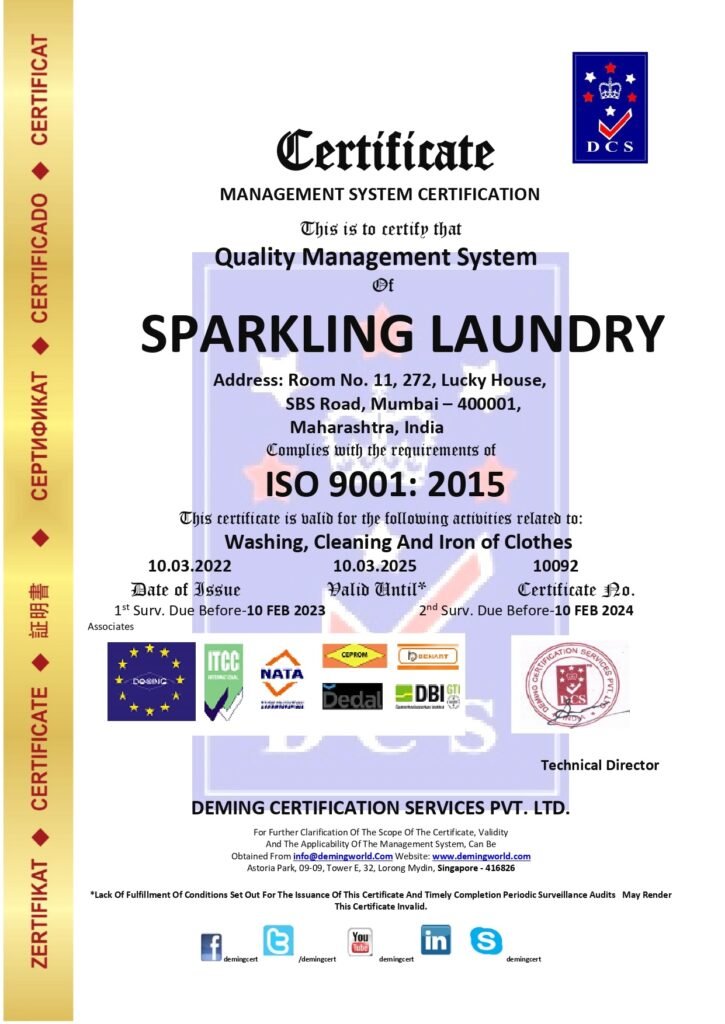
In 2022, Sparkling Laundry achieved ISO 9001:2015 certification for its Quality Management System. The certificate, with an issue year of 2022 and validity through 2025 as provided for this case story, represented an important milestone in the organization’s development. It symbolized the company’s commitment to establishing a structured approach to quality management.
However, the promoter understood that certification itself was only one part of the journey. The real challenge was maintaining the discipline behind the system. A certificate could demonstrate that a management system had been established, but sustainable business development depended on how consistently the organization applied and improved that system.
For Sparkling Laundry, the certification journey therefore became the beginning of a new phase. The promoter had an opportunity to look beyond immediate daily operations and think about long-term development. Better processes could support better service. Better service could strengthen customer confidence. Stronger customer confidence could contribute to business relationships and future opportunities.
The journey that began with the pursuit of ISO 9001:2015 was consequently more than a certification exercise. It represented a shift toward organized management, customer-focused thinking, employee responsibility, process discipline, and continual improvement. From its base on SBS Road in Mumbai, Sparkling Laundry entered this new phase with an important lesson: sustainable growth is not achieved only by doing more work, but by developing better ways of doing that work consistently.
This became the foundation upon which the next chapters of Sparkling Laundry’s growth story could be built.
#SparklingLaundry
Chapter 2 – Building a Systematic Approach
After beginning its ISO 9001:2015 Quality Management System journey, Sparkling Laundry entered a phase in which everyday activities were examined more systematically. The certification was not treated merely as a document to be displayed. For the promoter, it represented an opportunity to understand the organization more clearly and establish a structured way of managing quality. The goal was to create processes that employees could understand, follow, monitor, and improve.
Laundry operations involve many stages, and each stage has a direct or indirect effect on customer satisfaction. When a customer gives garments to a laundry service, the expectation is simple: the right garments should be handled carefully, processed according to requirements, finished properly, and returned within the expected time. Achieving this consistently requires coordination between people and processes.
The promoter therefore began looking at the complete service cycle. Customer interaction was one of the first areas requiring attention. Understanding what the customer wanted was essential. Different garments may require different types of handling, cleaning, finishing, or packaging. If customer instructions are misunderstood at the beginning, problems can appear much later in the process. A systematic approach encouraged employees to pay attention to requirements before processing began.
The receiving stage was equally important. Garments entering the organization needed proper identification and handling. Maintaining appropriate information about customer orders could help reduce confusion and support traceability. This became particularly important when several orders were being processed simultaneously. The organization could focus on maintaining clear records so that employees knew which garments belonged to which customer and what requirements applied to each order.
Sorting represented another important part of the process. Garments could differ in material, colour, condition, and processing requirements. Careful sorting helped establish an organized workflow and reduced the possibility of inappropriate processing. Employees were encouraged to understand that this was not simply a routine physical activity; it was an important quality-control point.
The processing stage required similar attention. Employees needed to follow established practices rather than relying entirely on individual habits. Consistency became increasingly important. The objective was to make the service dependable regardless of which employee was performing a particular task. This approach helped create a stronger connection between employee responsibilities and the overall Quality Management System.
The promoter also recognized that inspection should not be ignored. Quality needed to be considered throughout the process instead of only at the end. After processing and finishing, garments could be checked before packing and delivery. This provided an additional opportunity to identify issues and take appropriate action before the order reached the customer.
Documentation played an important supporting role in this systematic approach. Records could provide useful evidence about activities and help management understand what was happening within the organization. Instead of depending exclusively on verbal communication, important information could be maintained in an organized manner. This could make it easier to identify recurring problems and evaluate corrective actions.
The introduction of structured procedures also changed the way employees understood their responsibilities. Previously, an employee might have considered a task complete once the physical activity was finished. Under a quality-focused system, completion also involved following the appropriate procedure and ensuring that the expected result had been achieved.
For the promoter, this created a valuable management advantage. A business becomes increasingly difficult to manage when all decisions and operational information remain concentrated with one person. By establishing responsibilities and processes, Sparkling Laundry could gradually distribute operational responsibility among team members while maintaining management oversight.
Training and communication became important parts of this transition. Employees needed to understand why procedures existed rather than simply being told to follow them. When people understand the reason behind a requirement, they are more likely to recognize its importance. The promoter could therefore encourage employees to think about how their work affected the customer and the next stage of the process.
Customer feedback also became an important source of information. A complaint could reveal a weakness in a process, while a suggestion could provide an opportunity for improvement. Rather than treating feedback only as a customer-service issue, the organization could consider whether it indicated a need for changes in receiving, processing, inspection, communication, or delivery.
This approach helped introduce the concept of preventive thinking. Instead of waiting for the same problem to occur repeatedly, the organization could investigate why it happened and consider what could be changed to prevent recurrence. Such thinking supported the broader objective of continual improvement associated with quality management.
The promoter also began viewing quality as a business-management responsibility. It was not enough for one employee to work carefully while another ignored established practices. Consistency required participation throughout the organization. Every stage had a role in producing the final customer experience.
As these ideas became part of daily management, Sparkling Laundry could begin developing a more organized working environment. Processes became easier to understand, responsibilities became clearer, and management had greater visibility into areas requiring attention. The Quality Management System provided a framework for connecting these activities.
The importance of this transformation extended beyond certification. A structured system could help the organization prepare for increased business activity. If customer orders increased, clearly defined processes could provide a stronger foundation for handling additional work. Growth could then be approached with greater awareness of capacity, resources, employee responsibilities, and quality requirements.
For the promoter, this was an important realization. Business growth and quality management did not need to be treated as separate objectives. They could support one another. A company that understands its processes is better positioned to identify inefficiencies. A company that listens to customers can better understand expectations. A company that trains employees and clarifies responsibilities can create greater operational consistency.
Sparkling Laundry’s systematic approach therefore became one of the important outcomes of its ISO 9001:2015 journey. The organization began moving from informal supervision toward structured process management. The transformation was gradual, requiring attention, communication, and continued discipline, but it created a stronger foundation for the chapters of growth that followed.
The promoter now had a clearer understanding that quality was not a single department, a single employee, or a single inspection. Quality was the result of many connected actions performed consistently. This principle became central to Sparkling Laundry’s continuing development and its ambition to build a more dependable and professionally managed laundry service.
#ISO9001
Chapter 3 – Improving Customer Confidence
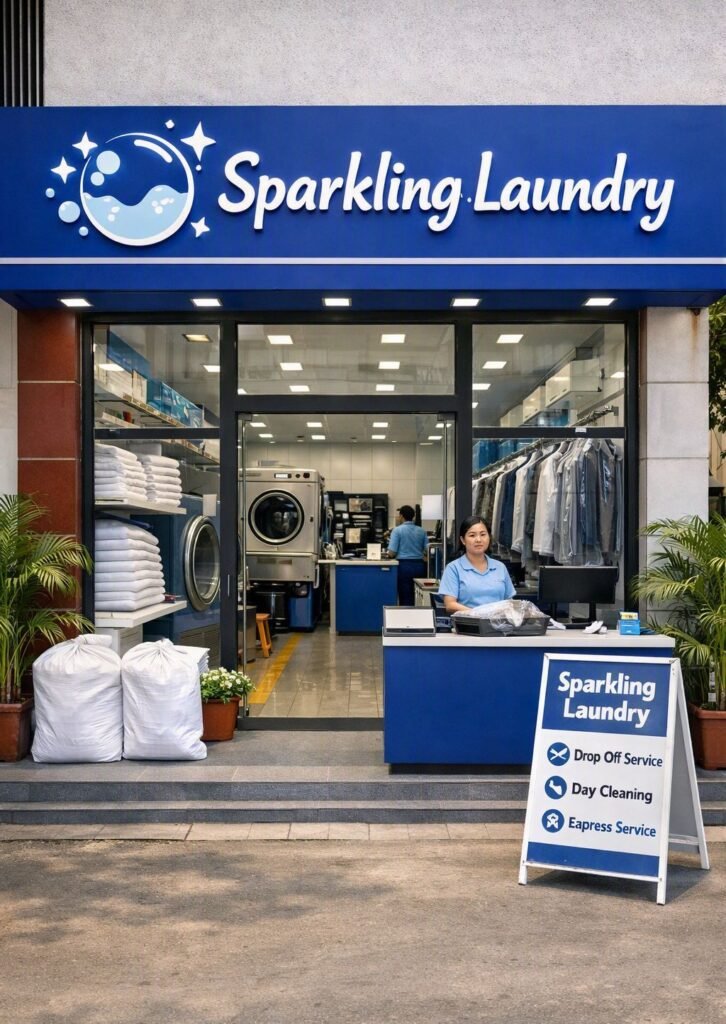
As Sparkling Laundry continued developing its Quality Management System after pursuing ISO 9001:2015 certification, the promoter increasingly recognized that the ultimate purpose of quality was customer satisfaction. Machines, procedures, records, training, and inspections all had an important role, but their combined value could be measured through the experience provided to customers. A laundry customer expected garments to be handled responsibly, processed appropriately, returned in good condition, and delivered within the agreed expectations. Building confidence around these requirements became an important part of Sparkling Laundry’s growth journey.
The promoter understood that customer confidence was not created through advertising alone. It was developed through repeated experiences. When customers received consistent service over time, they were more likely to trust the organization with future orders. For a laundry business, this trust could be particularly important because customers were handing over personal belongings that could have financial, practical, or sentimental value.
The Quality Management System encouraged Sparkling Laundry to think carefully about the complete customer experience. The process began before garments entered the washing or processing stage. It started with communication. Employees needed to understand customer requirements accurately and communicate relevant information clearly. If a customer had specific instructions, those requirements needed appropriate attention.
Receiving garments therefore became an important quality point. Proper identification and order information could help employees maintain clarity throughout the processing cycle. As the organization handled multiple customer orders, systematic identification became increasingly useful. The objective was to minimize avoidable confusion and create greater confidence that each order would remain properly controlled.
The promoter also encouraged greater attention to the condition of garments when they were received. Understanding the initial condition could help the organization communicate appropriately with customers and identify situations requiring special care. Such practices could contribute to more transparent communication and reduce misunderstandings.
Another important area was processing consistency. Customers generally do not expect one experience to be completely different from another. They want a dependable level of service. Sparkling Laundry therefore had an opportunity to use established procedures to reduce unnecessary variation in its operations. Employees could follow defined practices while management monitored performance and addressed issues when they appeared.
Inspection also became an important part of customer confidence. Before garments were packed and returned, the organization could check whether the expected processing and finishing activities had been completed. This final review provided an additional opportunity to identify issues before delivery. Even a small checking activity could become valuable when repeated consistently across orders.
The promoter also understood that customer complaints should not automatically be considered negative events. Complaints could provide valuable information about areas where expectations were not being met. If a customer reported a recurring problem, management could examine whether the cause originated in receiving, sorting, processing, finishing, communication, or delivery.
This encouraged a shift from simply resolving complaints to learning from them. A customer issue could be recorded, investigated, and followed by appropriate corrective action. If a particular problem occurred repeatedly, the organization could ask whether a procedure needed clarification, whether an employee required additional training, or whether a process needed modification.
Customer suggestions could similarly become a source of improvement. Customers interact with the service directly and may notice details that employees or managers overlook. Listening to those observations could help Sparkling Laundry identify opportunities to improve communication, packaging, turnaround expectations, or other service-related activities.
The promoter’s approach to customer relationships therefore became increasingly systematic. Instead of depending solely on personal interaction, the organization could develop processes that supported consistent customer care. This was especially useful because business growth could result in more customers and greater operational complexity. A structured system could help maintain service discipline as activity increased.
Employee behavior also had a direct influence on customer confidence. A well-designed process could lose its effectiveness if employees did not understand their responsibilities. Sparkling Laundry therefore had to emphasize communication and awareness. Employees needed to understand that every interaction with a customer could influence the organization’s reputation.
Professional communication became part of the broader quality culture. Customers needed clear information about orders, requirements, timing, and any issues that arose. When unexpected circumstances occurred, timely communication could be important in maintaining trust. The objective was not to promise perfection but to create transparency and responsible service management.
The promoter also recognized that customer confidence could support long-term business relationships. A satisfied customer might return repeatedly, recommend the service to others, or consider the organization for larger requirements. While certification itself could not guarantee customer loyalty or business growth, a functioning Quality Management System could provide a structured foundation for delivering consistent service.
The ISO 9001:2015 framework also encouraged Sparkling Laundry to view customer requirements as an important input to management decisions. Instead of designing processes only around internal convenience, the organization could consider what customers actually expected. This customer-focused approach helped connect operational decisions with business objectives.
Over time, the idea of quality became increasingly associated with reliability. Quality was not only about whether garments looked clean after processing. It also included order identification, communication, handling, consistency, timely service, appropriate finishing, and customer response. Every one of these factors contributed to the overall perception of the organization.
For the promoter, this represented an important stage in Sparkling Laundry’s development. The company was not simply trying to process more garments; it was building a system capable of delivering a dependable service experience. The Quality Management System provided a framework for maintaining this focus and identifying areas requiring improvement.
The journey toward stronger customer confidence therefore became closely connected with the organization’s internal discipline. Better processes supported better control, better control supported greater consistency, and greater consistency could contribute to customer trust. This relationship between internal quality and external customer experience became an important part of Sparkling Laundry’s continuing growth story.
By strengthening its focus on customers, Sparkling Laundry created a foundation for the next stage of development: building a team capable of maintaining these standards through clear responsibilities, training, communication, and shared commitment to quality.
#ISO90012015
Chapter 4 – Developing Employees and Responsibilities
As Sparkling Laundry continued its Quality Management System journey after ISO 9001:2015 certification, the promoter realized that processes could only become effective when the people responsible for carrying them out understood their roles. A quality system is not created by documents alone. It depends on employees knowing what is expected, having the necessary awareness and skills, and understanding how their individual activities contribute to customer satisfaction. This realization made employee development an important part of Sparkling Laundry’s growth story.
In a laundry organization, many activities take place behind the final service experienced by a customer. Someone receives the garments, another person may identify and sort them, processing activities are performed, garments are dried and finished, quality checks are completed, and finally the order is prepared for delivery. Each activity has its own importance. If one stage is poorly controlled, the result can affect the entire order.
The promoter therefore began looking at responsibilities more systematically. Instead of assuming that experienced employees automatically understood every requirement, the organization could define expectations more clearly. Employees could be made aware of procedures, quality requirements, customer expectations, and the importance of maintaining proper information.
This approach helped create greater accountability. When responsibilities are clearly understood, employees can recognize which activities they are responsible for and when they need to communicate with another team member. It also becomes easier for management to identify where additional training or support may be required.
Training became an important element of this development. New employees needed to understand the organization’s working methods, while existing employees could benefit from periodic awareness and skill development. Training could cover topics such as garment handling, sorting practices, processing requirements, inspection, workplace discipline, customer communication, and relevant quality procedures.
The promoter understood that training should not be viewed only as a formal activity. Everyday guidance could also contribute to employee development. When a supervisor explained why a particular process was important, employees could better understand the relationship between their work and the final customer experience.
For example, careful sorting might initially appear to be a routine task. However, employees could be shown how incorrect sorting might affect the processing result and ultimately customer satisfaction. Similarly, inspection could be explained not merely as another task but as an opportunity to identify an issue before an order reached the customer.
This practical understanding could strengthen employee awareness. Instead of following procedures mechanically, employees could begin thinking about why those procedures existed. Such awareness supported the broader objective of building a quality culture.
Communication between employees was another important area. Laundry processing involves movement from one stage to another, and information needs to remain accurate as an order progresses. Clear communication could help prevent misunderstandings and reduce unnecessary delays.
The promoter also recognized the importance of creating an environment where employees could raise concerns. If a worker noticed a recurring problem, equipment issue, process difficulty, or customer requirement that was not being addressed properly, management needed to know about it. Employees working directly with daily operations can sometimes identify practical problems before they become larger issues.
Encouraging such communication could help Sparkling Laundry make better operational decisions. Employees could contribute suggestions for improving workflow, reducing unnecessary movement, organizing work areas, or improving customer service. In this way, employee participation became connected with continual improvement.
The promoter’s role also began to evolve. In a smaller organization, it is common for the promoter to personally monitor many activities. However, as the organization develops, excessive dependence on one individual can limit growth. A structured Quality Management System provides an opportunity to delegate responsibilities while retaining appropriate management oversight.
Delegation did not mean reducing responsibility. Instead, it meant creating a team capable of performing defined tasks with confidence. The promoter could concentrate more attention on planning, customer relationships, performance review, improvement opportunities, and future business development while employees managed their assigned operational responsibilities.
This transition could also strengthen organizational resilience. If every decision depended on one person, an absence or increase in workload could create difficulties. When responsibilities are distributed and processes are documented, employees can work with greater independence while still following established requirements.
Performance monitoring also became relevant. Management could consider whether processes were being followed effectively, whether customer complaints were recurring, whether delays were occurring, and whether employees required additional support. Such information could be used not merely to criticize performance but to identify opportunities for improvement.
Recognition and encouragement could further support employee engagement. When employees saw that careful work and useful suggestions were valued, they could develop a stronger sense of ownership. A quality culture becomes more sustainable when employees understand that their contribution matters.
The promoter also needed to ensure that quality expectations were practical. Procedures that are unnecessarily complicated can become difficult to maintain. The objective was to create a system that supported employees rather than creating unnecessary administrative burdens. Simple, clear, relevant processes could be easier to apply consistently.
As Sparkling Laundry continued its certification journey, employees therefore became an increasingly important part of the organization’s development. The Quality Management System provided structure, but employees gave that structure life through their daily actions.
The promoter’s vision gradually moved toward creating a workplace where everyone understood that quality was a shared responsibility. The person receiving an order, the person processing garments, the person checking the finished work, and the person communicating with customers all contributed to the final result.
This approach helped connect employee development with business growth. A growing organization needs people who can handle responsibilities reliably, communicate effectively, learn from problems, and contribute ideas. By strengthening employee awareness and accountability, Sparkling Laundry could build a stronger foundation for future expansion.
The ISO 9001:2015 journey therefore influenced not only processes but also people. It encouraged the promoter to develop a team-oriented approach in which responsibilities were clearer, communication was more structured, and employees could participate in continual improvement. This became another important step in transforming Sparkling Laundry from a service operation into a more systematically managed organization.
#QualityManagementSystem
Chapter 5 – Process Control and Consistency
As Sparkling Laundry progressed with its ISO 9001:2015 Quality Management System, the promoter increasingly understood that sustainable growth depended on consistent processes. Customer satisfaction could not rely entirely on individual effort or personal supervision. The organization needed a way of working that employees could understand and repeat across different orders and working situations. Process control therefore became one of the most important elements of Sparkling Laundry’s continuing development.
Laundry services involve a sequence of activities, and each activity influences the next. A garment received from a customer must be identified correctly before it can move into sorting. Sorting must be carried out carefully before processing begins. After processing, garments require appropriate drying, finishing, checking, packing, and delivery. If information is lost or an error occurs at one stage, the consequences can continue through the entire process.
The promoter therefore encouraged the organization to view its operations as a connected chain rather than a collection of separate tasks. This process-based thinking helped employees understand that their work had an impact beyond their immediate responsibility. A person completing one stage was also contributing to the success of the next stage.
One of the important objectives was to reduce avoidable variation. Different employees may naturally develop different working habits, but excessive variation can make service quality unpredictable. By establishing appropriate procedures and work practices, Sparkling Laundry could encourage employees to follow a more consistent approach.
The receiving process was an important starting point. Customer garments needed to be handled with care and appropriate information needed to be maintained. Proper identification and order details could support traceability throughout the service cycle. This became especially useful when multiple orders were being processed at the same time.
Sorting was another critical control point. Garments could differ in colour, material, condition, and processing requirements. Employees therefore needed to pay attention to the characteristics of garments before processing. Careful sorting could help reduce the possibility of inappropriate handling and support a more organized workflow.
Processing itself required discipline. Employees needed to understand applicable procedures and follow them consistently. Rather than relying entirely on personal experience, the organization could use established methods as a common reference point. This approach helped make operations less dependent on individual working styles.
The promoter also recognized the importance of equipment and resources. Effective process control requires suitable resources and attention to their condition. Where equipment is used regularly, appropriate maintenance and monitoring can help support reliable operations. Problems with equipment can affect schedules and processing consistency, making timely attention important.
Workplace organization could also influence efficiency. A well-organized working area can make it easier for employees to locate materials, identify orders, move garments between stages, and complete activities without unnecessary confusion. Small improvements in organization can therefore contribute to smoother workflows.
Inspection became another important part of process control. Instead of assuming that every completed order was automatically correct, employees could check work at appropriate stages. A final review before packing and delivery could provide an opportunity to identify issues and take corrective action.
When an issue was identified, the promoter could encourage employees to look beyond the immediate correction. For example, if an order was delayed or a processing error occurred, management could ask why the problem happened and whether something in the process needed to change. This approach supported preventive thinking.
Corrective action therefore became more than fixing one individual order. If a problem had the potential to recur, the organization could consider changes to procedures, employee awareness, communication, or monitoring. The objective was to address causes rather than repeatedly deal with the same symptoms.
Records and documentation could support this process. Information about customer feedback, complaints, inspections, corrective actions, and other relevant activities could provide management with evidence for decision-making. Instead of relying solely on memory, the promoter could review available information when evaluating performance.
This created a more informed management approach. If a particular type of problem appeared repeatedly, management could investigate it. If performance improved after a process change, the organization could recognize that improvement. Documentation therefore became a management tool rather than simply a certification requirement.
Consistency was also important from a customer perspective. Customers expect their experience to remain dependable even when different employees handle their orders. A systematic process can help reduce the influence of individual variation and create a common standard for service delivery.
The promoter’s understanding of growth also developed through this experience. Increasing the number of customers without controlling processes could create additional pressure on employees and increase the possibility of errors. Growth therefore needed to be supported by process capability.
If Sparkling Laundry expanded its workload, the organization would need to consider whether employees, equipment, space, communication, and workflow could handle the additional activity. The Quality Management System encouraged management to think about these issues systematically rather than waiting until problems occurred.
Process control also created opportunities for efficiency. When activities are clearly understood, unnecessary steps can be identified. Repeated delays or confusion can highlight areas where workflow can be improved. Better organization can save time while maintaining quality.
For the promoter, this was an important lesson: quality and efficiency do not have to be opposing objectives. A well-controlled process can support both. When employees know what to do, information is available when required, and problems are identified early, the organization can reduce unnecessary rework and confusion.
The ISO 9001:2015 framework therefore helped Sparkling Laundry strengthen its understanding of operational consistency. The focus moved from simply completing orders toward controlling the processes that produced those orders.
As the company continued its journey, the promoter could see that a strong Quality Management System provided a foundation for disciplined growth. Every controlled process contributed to a larger objective: creating a service organization capable of meeting customer requirements with greater consistency.
Sparkling Laundry’s progress in process control was therefore not just about procedures. It was about creating a culture in which employees understood the importance of doing work correctly, checking results, learning from problems, and continually improving the way services were delivered. This discipline became a key building block for the company’s future development.
#QualityManagement
Chapter 6 – From Certification to Business Discipline
The achievement of ISO 9001:2015 certification in 2022 marked an important stage in Sparkling Laundry’s development, but the promoter understood that receiving a certificate was not the end of the quality journey. The real value of certification came from maintaining the management practices behind it. For Sparkling Laundry, the Quality Management System gradually became an opportunity to introduce greater discipline into everyday business activities.
Before a structured system is established, many small and growing businesses depend heavily on experience, personal supervision, verbal instructions, and immediate problem-solving. These methods can be useful in the early stages of a business, but as customer requirements and workloads increase, they can become difficult to manage. The promoter therefore recognized the need to move toward a system in which important activities could be planned, monitored, reviewed, and improved.
The Quality Management System encouraged this transition. Instead of asking only whether an order had been completed, management could consider whether the process used to complete it was effective. Were customer requirements understood? Were garments properly identified? Were employees following established procedures? Were problems recorded and addressed? Were customers satisfied with the service? These questions encouraged a more disciplined management approach.
The promoter also began looking at quality from a broader business perspective. Quality was connected with customer satisfaction, employee performance, operational efficiency, reputation, and future opportunities. A problem that appeared small at one stage could potentially influence several other areas. For example, an error in order identification could result in additional work, customer dissatisfaction, delayed delivery, and unnecessary pressure on employees.
By identifying such relationships, Sparkling Laundry could work toward preventing problems rather than repeatedly correcting them. This was an important change in management thinking. Corrective action remained necessary when problems occurred, but prevention and continual improvement became equally important.
Management review provided another opportunity to evaluate the organization. The promoter could consider customer feedback, operational performance, complaints, improvement activities, employee requirements, and other relevant information. Such reviews could help management identify priorities instead of making decisions solely on immediate impressions.
The Quality Management System also encouraged attention to objectives. A business needs direction, and quality objectives can help convert broad intentions into areas that can be monitored. For Sparkling Laundry, objectives could relate to service consistency, customer satisfaction, timely completion, complaint reduction, employee awareness, process improvement, or other relevant aspects of operations.
The purpose of objectives was not simply to create numbers. They could provide a basis for discussion and evaluation. If performance was not meeting expectations, management could ask why. If a target was achieved, the organization could consider what practices contributed to the result and whether those practices should be strengthened.
This approach also helped the promoter understand the difference between working harder and working more systematically. Employees could increase effort for a short period to deal with a higher workload, but sustainable growth required processes that could support increased activity without creating unnecessary quality problems.
Resource planning therefore became important. As the organization considered future growth, management needed to think about people, equipment, workspace, materials, communication, and time. Growth without adequate resources could place pressure on the existing system. A quality-oriented approach encouraged the promoter to consider capacity before making operational commitments.
Supplier and resource management could also influence quality. The organization depended on materials, equipment, utilities, and other external resources to support its operations. Maintaining appropriate controls over these inputs could contribute to more consistent service delivery.
Employee competence remained another part of business discipline. The promoter recognized that procedures alone could not guarantee quality. Employees needed appropriate knowledge, awareness, and practical understanding. Training could therefore be used to strengthen capability and address identified weaknesses.
Documentation also became more meaningful when connected to management decisions. Records could provide evidence of what happened, but their greater value came from what the organization learned from them. A complaint record could identify a recurring issue. A training record could demonstrate employee development. An inspection record could reveal areas requiring attention.
This information could help management make decisions based on evidence rather than assumptions. The promoter could identify patterns, prioritize improvements, and evaluate whether corrective actions were effective.
Another important change was the way problems were viewed. Instead of assigning blame immediately, the organization could investigate causes. If an error occurred, management could examine whether the employee had appropriate instructions, whether the process was clear, whether information was available, or whether workload contributed to the issue.
Such thinking encouraged a healthier quality culture. Employees could be more willing to report problems when they understood that the purpose of reporting was improvement rather than automatic blame. This could help management identify issues earlier.
The promoter also recognized that business discipline had to remain practical. A quality system should support operations rather than become an unnecessary burden. Procedures needed to be understandable, relevant, and connected with actual work. When employees could see the practical value of a requirement, implementation became easier.
Over time, these practices could influence the overall management culture at Sparkling Laundry. Quality became less dependent on occasional supervision and more connected with routine activities. Employees became more aware of customer requirements, processes became more structured, and management gained greater visibility into performance.
The certification therefore represented more than a formal achievement. It provided a framework through which Sparkling Laundry could strengthen its internal discipline. The promoter could use that framework to connect daily operations with broader business goals.
This discipline also created a stronger foundation for future growth. A business that understands its processes and monitors its performance is better positioned to recognize opportunities and manage challenges. Although ISO 9001:2015 certification itself does not guarantee commercial success, the management principles associated with it can support organizations seeking greater consistency and continual improvement.
For Sparkling Laundry, the journey from certification to business discipline was therefore a gradual transformation. The promoter increasingly viewed quality as part of management rather than a separate activity. Employees became participants in the system, records became sources of information, customer feedback became an input for improvement, and operational problems became opportunities to strengthen processes.
The result was a developing culture of accountability and continuous learning. Sparkling Laundry’s Quality Management System became part of its broader effort to build a disciplined and customer-focused organization, creating a foundation for the next stage of its growth journey.
#LaundryBusiness
Chapter 7 – Strengthening the Promoter’s Vision
The development of Sparkling Laundry’s Quality Management System brought a gradual change not only in operational practices but also in the promoter’s approach to business management. Before the organization adopted a structured quality framework, much of the attention naturally remained on immediate responsibilities—serving customers, completing orders, managing employees, handling daily challenges, and maintaining business continuity. As the ISO 9001:2015 system developed, the promoter gained an opportunity to look beyond the immediate demands of the working day and consider the organization’s longer-term direction.
The promoter began to understand that sustainable business development required a balance between customer satisfaction, employee capability, process discipline, resource management, and continual improvement. Growth could not be measured only by the number of orders handled. It also depended on whether the organization could maintain consistent service while managing increasing responsibilities.
This broader perspective became particularly important for a laundry service. Every customer interaction represented an opportunity to strengthen or weaken the organization’s reputation. A single order might appear small from a business perspective, but for the customer, the garments being handled could be extremely important. The promoter therefore continued to emphasize careful handling, accurate communication, proper processing, and dependable service.
The Quality Management System encouraged the promoter to think about customer requirements systematically. Rather than assuming what customers wanted, the organization could pay attention to feedback, complaints, suggestions, and recurring expectations. This information could then be considered when reviewing processes and planning improvements.
One of the most important changes in the promoter’s thinking was the recognition that quality needed to become part of organizational culture. A promoter cannot personally supervise every activity forever. As a business develops, employees must take ownership of their responsibilities. The promoter therefore had to create an environment in which employees understood the importance of their work and felt responsible for contributing to quality.
This required communication. Employees needed to know the organization’s expectations and understand how their work influenced other processes. The promoter could explain that quality was not simply the responsibility of the person conducting a final check. It began when garments were received and continued through every stage until the finished order reached the customer.
The promoter also began viewing employees as sources of improvement ideas. People who work directly with processes often notice practical difficulties that may not be obvious to management. An employee might identify unnecessary movement, a recurring source of confusion, a communication gap, or an opportunity to simplify a task.
Encouraging employees to communicate such observations could strengthen the organization. Instead of keeping improvement ideas concentrated at management level, Sparkling Laundry could develop a culture in which everyone contributed to better ways of working.
This approach also supported employee confidence. When people are trusted with responsibilities and encouraged to contribute, they can develop a stronger sense of ownership. Training and awareness could further strengthen their ability to perform their roles effectively.
The promoter’s vision also extended to customer relationships. A business becomes more sustainable when customers see it as dependable rather than simply convenient. Consistent quality could help establish repeat relationships and positive word-of-mouth. Although no quality system can guarantee customer retention, a systematic approach can help an organization understand and respond to customer expectations.
The promoter therefore began considering quality as part of the company’s reputation. The organization’s reputation would be influenced by many small experiences: how customers were greeted, how orders were recorded, how garments were handled, how questions were answered, how problems were resolved, and how completed orders were delivered.
Every employee could influence this reputation. This realization made organizational awareness increasingly important.
Another aspect of the promoter’s developing vision was continual improvement. A successful process today may not necessarily remain the most effective process tomorrow. Customer expectations can change, technology can develop, workloads can increase, and operational challenges can emerge. The organization therefore needed to remain open to improvement.
The promoter could use management reviews, customer feedback, complaints, employee suggestions, and performance information to identify areas where change might be beneficial. Improvement did not always require major investment. Sometimes small changes in communication, organization, identification, scheduling, or inspection could make a meaningful difference.
This mindset helped create a distinction between reacting to problems and planning for improvement. If a problem occurred, it could be corrected. But management could also ask whether a broader change would reduce the possibility of recurrence.
The promoter’s vision increasingly became connected with controlled growth. Expansion can bring new opportunities, but it can also create additional operational pressure. More customers may mean more orders, greater employee requirements, increased resource consumption, and more complex coordination. The organization therefore needed to ensure that growth did not compromise its service standards.
The Quality Management System provided a useful framework for considering these challenges. Before introducing a change, management could think about its effect on existing processes, resources, employees, customer requirements, and quality controls.
This encouraged a more thoughtful approach to business development. Rather than pursuing growth at any cost, the promoter could focus on building the capability required to support growth responsibly.
The promoter also recognized the importance of maintaining discipline after certification. The ISO 9001:2015 certificate issued in 2022 and valid through 2025 was an important milestone, but the continuing value of certification depended on maintaining the underlying system. Procedures needed to remain relevant, employees needed continued awareness, and improvement activities needed management attention.
The certificate could represent the organization’s quality commitment, but daily actions gave that commitment meaning.
As Sparkling Laundry continued its journey, the promoter’s role therefore became increasingly strategic. The focus expanded from personally managing individual tasks toward building a system capable of supporting employees, customers, and future business requirements.
The promoter’s vision was no longer limited to running the business successfully today. It increasingly involved creating a foundation that could support tomorrow’s opportunities while maintaining attention to quality.
This evolution in leadership thinking became an important part of Sparkling Laundry’s growth story. ISO 9001:2015 provided a structured framework, but the promoter’s commitment to applying its principles helped connect that framework with the organization’s broader aspirations.
The journey demonstrated an important business lesson: growth becomes more sustainable when leadership combines ambition with process discipline, customer focus, employee involvement, and continuous improvement. For Sparkling Laundry, strengthening the promoter’s vision was therefore not a separate achievement—it was a natural continuation of the organization’s quality journey.
#BusinessGrowth
Chapter 8 – Creating Opportunities for Growth
As Sparkling Laundry continued its journey with an ISO 9001:2015 Quality Management System, the promoter began to see quality management not only as a method for controlling existing operations but also as a foundation for exploring future business opportunities. The organization had developed greater awareness of processes, customer requirements, employee responsibilities, documentation, and continual improvement. These elements could provide useful support as the business considered ways to strengthen its market presence and serve customers more effectively.
For a service organization, growth can take many forms. It may involve serving more customers, developing stronger relationships with existing customers, improving turnaround times, introducing additional services, strengthening operational capacity, or becoming more organized. Each opportunity needs to be considered carefully because increased business activity can also create additional pressure on employees, equipment, resources, and processes.
The promoter therefore understood that growth needed to be connected with operational capability. It would not be enough to attract additional customers if the organization could not maintain consistent service. The Quality Management System encouraged management to consider whether processes were capable of supporting additional requirements before making significant commitments.
Customer confidence could play an important role in creating opportunities. When customers experience consistent service, they may be more comfortable returning to the same organization. Positive experiences can also contribute to recommendations and stronger business relationships. Sparkling Laundry could therefore focus on making every customer interaction an opportunity to demonstrate professionalism.
The promoter also understood that ISO 9001:2015 certification could communicate the organization’s commitment to a recognized Quality Management System. The certificate issued in 2022 provided a formal representation of that commitment during its stated validity through 2025. However, the promoter recognized that the certificate itself could not replace actual performance. Customer confidence would ultimately depend on how consistently the organization delivered its services.
This understanding prevented certification from becoming merely a marketing statement. Instead, the promoter could use the certification as part of a broader story about process discipline and customer focus. When communicating with prospective customers, the organization could explain its approach to quality and demonstrate the systems supporting its services.
Professional presentation became increasingly important. Customers and business partners often look beyond the immediate service and consider whether an organization appears organized, reliable, and capable of meeting requirements. A structured management system could support this professional image by giving Sparkling Laundry clearer processes and responsibilities.
The promoter also considered the importance of service capacity. If demand increased, the organization would need to evaluate available employees, equipment, workspace, processing time, materials, and communication systems. Quality management encouraged management to consider these factors systematically.
Employee capability was especially important. Additional orders would require employees to manage increased workloads without allowing quality to decline. Training, work allocation, communication, and supervision could therefore become increasingly important as business activity developed.
The organization could also look for opportunities to improve efficiency. A quality system does not only focus on correcting errors; it can encourage management to identify processes that consume unnecessary time or resources. By examining workflows, Sparkling Laundry could potentially identify opportunities to simplify activities, improve coordination, and reduce avoidable rework.
Small improvements could have significant cumulative effects. Better organization of orders could reduce confusion. Clearer communication could reduce misunderstandings. Improved inspection could identify problems before delivery. Better employee awareness could reduce process variation. Each improvement could contribute to the organization’s ability to handle business more effectively.
The promoter also recognized that customer expectations can change. A business cannot assume that the needs of customers will remain exactly the same over time. Customers may increasingly expect convenience, responsiveness, communication, and dependable turnaround. The organization therefore needed to remain attentive to feedback and market requirements.
Continual improvement became a way of keeping the business adaptable. Instead of treating existing procedures as permanent, management could review them and determine whether changes were necessary. This could help Sparkling Laundry respond to new circumstances while maintaining its quality objectives.
Another opportunity for development came through stronger relationships with existing customers. Customer retention could provide continuity and help the organization understand recurring requirements. By listening carefully to regular customers, Sparkling Laundry could identify patterns that might inform service improvements.
The promoter could also use customer feedback to identify areas where the organization was performing well. Not every improvement needs to begin with a complaint. Positive feedback can show which practices customers value and should therefore be maintained.
Business opportunities could also encourage greater attention to risk. Before accepting a new type of requirement or significantly increasing workload, management could consider possible challenges. Would employees have the necessary skills? Would existing processes be sufficient? Would additional resources be required? Could service quality be maintained?
This type of thinking helped connect business expansion with responsible planning. The objective was not simply to increase activity but to ensure that growth remained manageable.
The Quality Management System could therefore become a supporting framework for decision-making. When evaluating a new opportunity, the promoter could consider customer requirements, process capability, resources, risks, employee competence, and quality controls. This helped reduce the possibility of making decisions based only on short-term expectations.
For Sparkling Laundry, this represented an important stage of maturity. The organization was increasingly able to view quality and growth as interconnected. Strong processes could support customer confidence, customer confidence could support business relationships, and business opportunities could encourage further process improvement.
The promoter also understood that every new opportunity brought a responsibility to protect the organization’s existing standards. Expansion should not mean compromising on the quality principles that had been established. Maintaining consistency was essential to preserving customer trust.
The ISO 9001:2015 journey therefore provided Sparkling Laundry with a structured foundation from which future opportunities could be considered. It did not guarantee new customers, increased revenue, or commercial expansion, but it encouraged the organization to prepare its internal systems for changing requirements.
By this stage, Sparkling Laundry’s growth story had moved beyond certification itself. The promoter was increasingly focused on building organizational capability, strengthening customer relationships, developing employees, and improving processes.
The future could therefore be approached with greater structure and awareness. Every opportunity could be evaluated not only in terms of potential business value but also in terms of the organization’s ability to deliver consistently.
For Sparkling Laundry, this balance between opportunity and capability became an important principle. Sustainable development required ambition, but it also required discipline. The Quality Management System provided a framework through which the promoter could connect these two elements and continue building the organization step by step.
#CustomerSatisfaction
Chapter 9 – Continuous Improvement and Future Readiness
As Sparkling Laundry progressed through its ISO 9001:2015 Quality Management System journey, the promoter increasingly understood that maintaining quality was a continuous responsibility. Certification in 2022 was an important milestone, but the organization’s development could not stop with the achievement of a certificate. The real strength of the system depended on how effectively its principles were applied, reviewed, and improved over time.
The concept of continual improvement became particularly relevant to Sparkling Laundry because customer expectations, operational conditions, employee requirements, and business circumstances could change. A process that worked effectively at one point might require adjustment later. The promoter therefore encouraged an approach in which the organization remained open to learning and improvement.
One of the most useful sources of improvement was customer feedback. Customers experience the service directly, and their comments can provide information that management may not otherwise notice. A suggestion about communication, order handling, packaging, timing, or another part of the service could become an opportunity to examine an existing process.
Complaints were also treated as useful information. Rather than viewing every complaint simply as a negative incident, management could investigate the underlying cause. If a customer reported a problem, the organization could ask what happened, where the process failed, and whether the same issue might occur again.
This approach helped move the organization from reaction toward prevention. Correcting a single order was important, but preventing similar problems from recurring was even more valuable from a management perspective. Corrective actions could therefore involve changes to procedures, employee awareness, communication, inspection, or other relevant controls.
The promoter also recognized the value of internal observations. Employees working with processes every day could identify recurring difficulties and potential improvements. Their suggestions could help management understand practical issues that may not be visible from a purely managerial perspective.
Encouraging employee participation supported a culture of shared responsibility. Employees were not simply expected to follow procedures; they could also contribute to improving those procedures. This created an environment in which quality became a collective objective.
Management reviews provided another opportunity for reflection. The promoter could examine information about customer satisfaction, complaints, process performance, employee needs, resources, corrective actions, and improvement activities. Reviewing such information could help identify priorities for the next stage of development.
The purpose of review was not simply to determine whether the organization was operating successfully. It was also to identify where improvement could create greater value. A process might be functioning adequately but still contain opportunities to save time, improve communication, reduce confusion, or strengthen customer service.
This mindset was important for future readiness. A business that remains unchanged while its environment evolves can face difficulties. Sparkling Laundry therefore needed to maintain an attitude of adaptability while protecting its core quality principles.
Technology and changing customer expectations could influence the way laundry services were managed. Customers may increasingly value convenience, clear communication, predictable service, and efficient order handling. The promoter could consider whether existing processes were capable of responding to such expectations and whether improvements were necessary.
Future readiness also involved employee development. As processes changed, employees might require new knowledge or skills. Training could therefore be considered an ongoing activity rather than something completed only when a quality system was initially established.
The promoter could also review resource requirements. Increased business activity or changes in processing methods might require additional equipment, materials, workspace, or personnel. Planning these requirements in advance could help the organization avoid unnecessary disruption.
Risk-based thinking provided another useful perspective. Before making significant changes, management could consider what could go wrong and what controls might be needed. This did not mean trying to predict every possible event. Instead, it encouraged the organization to consider practical risks associated with processes and business decisions.
For example, if workload increased significantly, management could consider the impact on turnaround time and employee capacity. If a new process were introduced, employees might require training. If customer requirements changed, existing procedures might need review. Thinking about such issues beforehand could support smoother implementation.
The promoter also understood that continual improvement does not necessarily mean making dramatic changes. Small improvements can accumulate over time. A clearer form, better order identification, improved workplace organization, stronger communication, or more effective inspection can each contribute to better performance.
This approach made improvement more practical. Employees did not have to wait for a major project to contribute to quality. Everyday observations could become opportunities for refinement.
The Quality Management System also encouraged the organization to retain appropriate documented information. Records could demonstrate what had been done and provide information for future decisions. Over time, this created an organizational memory that could support learning.
For the promoter, this was especially valuable because business knowledge should not remain only in personal experience. A growing organization benefits when important practices and lessons are communicated and retained within the system.
The ISO 9001:2015 certification issued in 2022 and stated as valid through 2025 represented one stage in this continuing journey. The end of a stated certificate validity period did not change the underlying importance of quality principles. The organization’s commitment to customer focus, process control, employee involvement, corrective action, and continual improvement could continue as part of its management philosophy.
Future readiness therefore depended on maintaining the habits developed through the Quality Management System. The promoter could continue reviewing performance, listening to customers, supporting employees, evaluating processes, and identifying opportunities for improvement.
Sparkling Laundry’s journey demonstrated that quality management is not a destination reached when a certificate is issued. It is a continuing cycle of planning, implementation, monitoring, learning, and improvement.
By embracing this mindset, the organization could remain better prepared for changing customer requirements and operational challenges. The promoter’s focus shifted from simply maintaining existing standards toward creating an organization capable of learning from experience.
This continuous-improvement culture became an important part of Sparkling Laundry’s growth story. It helped connect past learning with future possibilities and encouraged the organization to view every challenge as an opportunity to strengthen its processes.
The journey toward future readiness was therefore built through many small and consistent actions. Each review, customer comment, employee suggestion, corrective action, and process improvement contributed to a stronger management foundation.
For Sparkling Laundry, the message was clear: certification could mark an important milestone, but continual improvement was what could keep the organization moving forward.
#ContinuousImprovement
Chapter 10 – A Continuing Journey of Growth
Sparkling Laundry’s journey toward ISO 9001:2015 certification represented more than the achievement of a formal certificate. It reflected a broader transformation in the way the promoter could approach quality, customer requirements, employee responsibilities, process control, and continual improvement. From its location at Room No. 11, 272, Lucky House, SBS Road, Mumbai – 400001, Maharashtra, India, the organization developed a stronger understanding of how systematic management could support its long-term business objectives.
The ISO 9001:2015 Quality Management System certificate, issued in 2022 and stated as valid through 2025, became an important milestone in this journey. For the promoter, however, the certificate was not the final destination. Its greater significance came from the systems and management practices established around it. The organization had an opportunity to build its future on greater process awareness and customer-focused thinking.
At the beginning of the journey, daily business activities could naturally depend heavily on individual experience and direct supervision. As the Quality Management System developed, Sparkling Laundry could increasingly rely on defined processes, responsibilities, records, communication, and review. This shift helped create a more organized approach to managing service quality.
One of the most important lessons was that quality begins with understanding customer requirements. A customer does not simply hand over garments; the customer places trust in the organization. That trust needs to be supported through careful handling, accurate identification, appropriate processing, proper finishing, effective communication, and responsible delivery.
The promoter therefore continued to view customer satisfaction as an important part of business development. Feedback and complaints could provide useful information about where processes were working and where improvements were required. By listening to customers, Sparkling Laundry could remain more responsive to changing expectations.
Employees also became an essential part of the organization’s growth. A quality system cannot operate effectively without people who understand their responsibilities. Training, awareness, communication, and participation helped create a stronger connection between individual work and organizational objectives.
The promoter’s role gradually evolved as well. Instead of focusing only on immediate operational issues, management could devote more attention to planning, performance review, customer relationships, resource requirements, and future opportunities. Delegating responsibilities within a structured system could help employees become more capable and accountable.
Process control remained another important achievement. Sparkling Laundry could view receiving, identification, sorting, processing, finishing, inspection, packing, and delivery as interconnected activities. Each stage had an influence on the final result. Improving one stage could therefore contribute to improvements throughout the service cycle.
This process-based perspective also supported problem-solving. When an issue occurred, management could look beyond the immediate error and consider its underlying cause. Corrective action could then focus on reducing the possibility of recurrence.
The promoter also learned that continual improvement does not always require major changes. Small improvements can create meaningful results when applied consistently. Better organization, clearer instructions, stronger communication, employee training, improved inspection, and more effective record-keeping can all contribute to operational development.
This philosophy created a culture in which improvement became an ongoing responsibility. Employees could contribute suggestions, management could evaluate performance, and customer feedback could provide additional information. The organization could therefore continue learning from its experiences.
The Quality Management System also provided a foundation for considering business opportunities. As customer demand changes, organizations need to assess their capability before expanding activities. Sparkling Laundry could consider employee capacity, equipment, resources, workflow, communication, and quality controls when evaluating new requirements.
This helped connect growth with responsible planning. Business expansion is more sustainable when an organization has the capability to maintain its service standards. The promoter therefore had an opportunity to approach growth not simply as an increase in workload but as an increase in organizational capability.
The journey also strengthened the importance of professional management. A structured organization is better positioned to communicate its methods to employees, customers, and business partners. ISO 9001:2015 certification could form part of that professional identity by demonstrating that Sparkling Laundry had adopted a recognized framework for quality management during the certification period.
Nevertheless, the promoter understood that certification alone could not guarantee commercial success. Customer loyalty, revenue growth, market opportunities, and business expansion depend on many factors. The value of the Quality Management System was instead in providing a framework that could help the organization manage its processes systematically.
As the certification period progressed, the principles established through the system could remain relevant to the organization’s future. The promoter could continue applying customer focus, process management, evidence-based decision-making, employee involvement, corrective action, and continual improvement.
This created a lasting lesson from the certification journey: quality should become part of how a company thinks and operates rather than something performed only for an audit.
Sparkling Laundry’s story can therefore be understood as a journey from operational activity toward structured business management. The organization’s experience with ISO 9001:2015 encouraged greater attention to consistency, accountability, customer requirements, employee participation, and improvement.
For the promoter, this transformation created a stronger foundation for thinking about the future. The objective was not simply to preserve what had already been achieved but to continue developing the organization in response to customer needs and business circumstances.
The future could bring new challenges, changing customer expectations, increased competition, technology changes, and new operational requirements. A culture of continual improvement could help Sparkling Laundry respond to these developments more thoughtfully.
The greatest achievement of the quality journey was therefore not the certificate alone. It was the development of a management mindset in which quality became connected with everyday work. Each employee, each process, each customer interaction, and each improvement contributed to the organization’s overall performance.
From the promoter’s perspective, the journey reinforced the idea that sustainable business development is built gradually. It requires discipline, patience, customer understanding, employee participation, and a willingness to learn from experience.
Sparkling Laundry’s ISO 9001:2015 journey thus became a chapter in its continuing business story. The certification period from 2022 to 2025 provided a structured opportunity to strengthen its Quality Management System and develop greater organizational awareness.
The story does not need to end with the certificate’s validity period. The principles learned through quality management can continue to guide future planning and improvement.
The journey of Sparkling Laundry ultimately demonstrates that quality is not a single event. It is a continuing process of understanding requirements, controlling activities, reviewing performance, correcting problems, learning from experience, and searching for better ways to serve customers.
With this mindset, the promoter and the organization could continue looking toward the future with a clear principle: build trust through consistent service, strengthen the system through continual improvement, and pursue growth without losing sight of quality.
#QualityCertification
#LaundryIndustry #QualityDrivenGrowth #ProcessImprovement #CertifiedQuality #BusinessExcellence
Take the Next Step Today
Don’t wait to enhance your business’s quality and efficiency. Partner with Mayu Group Global and experience the transformation that comes with expert consultancy and training. Contact us today to learn more about how we can help you achieve your business goals. Reach out via phone at
+91-9322728183, visit our website at www.mayugroup.com, or email us at investor@mayugroup.com Let us be your guide on the journey to excellence and innovation.