Vrindawan Spoken English Institute
- Vrindawan Spoken English Institute
- Chapter 1 – The Beginning of a Vision
- Chapter 2 – Understanding Quality in Education
- Chapter 3 – Building a Systematic Organisation
- Chapter 4 – Strengthening the Learning Experience
- Chapter 5 – The Promoter’s Role in Growth
- Chapter 6 – Expanding Through Multiple Locations
- Chapter 7 – Continuous Improvement as a Culture
- Chapter 8 – Building Trust Through Quality and Consistency
- Chapter 9 – Leadership, Learning and the Road Ahead
- Chapter 10 – A Continuing Journey of Quality, Growth and Purpose
- Take the Next Step Today
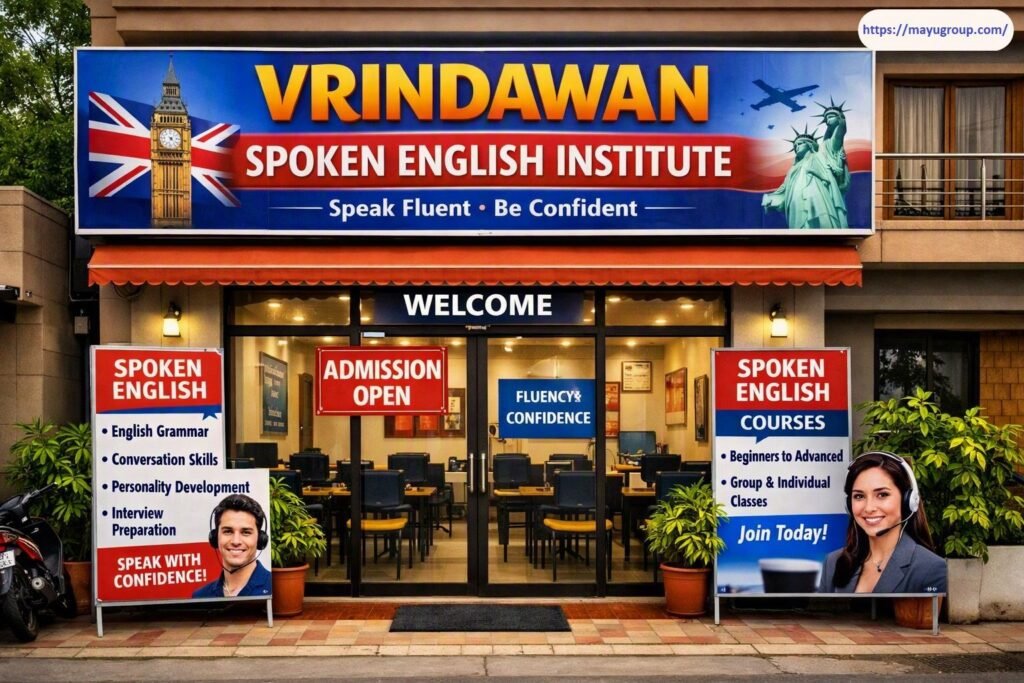
Chapter 1 – The Beginning of a Vision
Every successful educational institution begins with a vision. Before classrooms are filled with learners, before teachers stand before students, and before an organisation becomes known in its community, there is usually a simple idea: to provide something useful that can improve people’s lives. The story of Vrindawan Spoken English Institute can be viewed through this same perspective—a journey built around communication, learning, confidence and the continuous development of people.
English communication has become increasingly important in modern education and employment. Students may possess academic qualifications, technical knowledge or professional experience, yet effective communication can strongly influence how they present themselves in interviews, workplaces, educational environments and everyday interactions. Spoken English training therefore represents more than learning vocabulary or grammar. It can become a pathway toward greater confidence and participation.
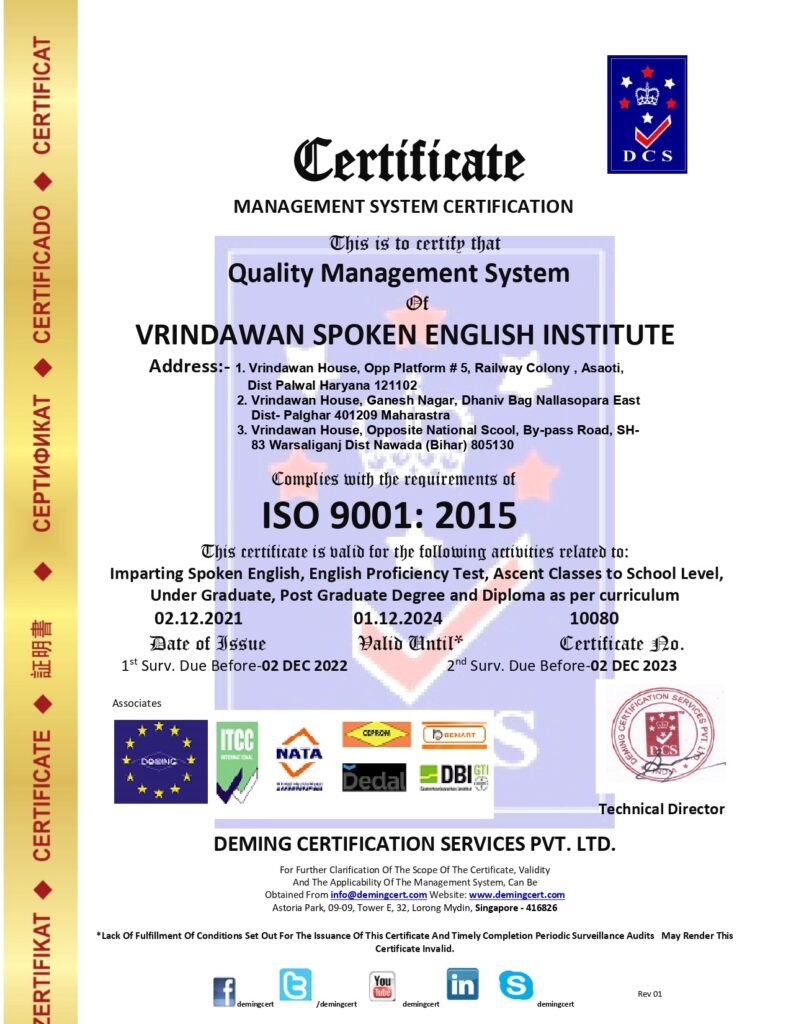
Vrindawan Spoken English Institute developed its presence with locations in different communities, including Asaoti in Haryana, Nallasopara East in Maharashtra and Warsaliganj in Bihar. These locations reflect the institute’s connection with learners from different geographical and social backgrounds. Each centre represents a local opportunity for people who want to strengthen their English-speaking abilities and improve their communication skills.
One of the important locations is Vrindawan House, opposite Platform No. 5, Railway Colony, Asaoti, District Palwal, Haryana – 121102. Its location within the Asaoti community places the institute within an environment where students, job seekers, workers and other learners can seek opportunities for personal and professional development.
Another location is Vrindawan House, Ganesh Nagar, Dhaniv Bag, Nallasopara East, District Palghar, Maharashtra – 401209. Nallasopara and the surrounding region have developed into active residential and employment communities, creating demand for practical skills that can support career development. An institute focused on spoken English can become part of that local learning ecosystem.
The third address is Vrindawan House, opposite National School, By-pass Road, SH-83, Warsaliganj, District Nawada, Bihar – 805130. This location extends the institute’s presence into another region and reflects the broader objective of making language learning accessible to people outside major metropolitan centres.
As the organisation developed, the management faced an important question: how could educational services be delivered in a more systematic and consistent manner?
Teaching is a people-oriented activity. Every learner has different abilities, expectations and learning requirements. Some students may struggle with pronunciation, while others may need help with grammar, vocabulary, sentence formation or confidence. Some may primarily want spoken English for employment, while others may wish to improve communication for education or personal development.
Because of these differences, quality in education cannot depend only on the knowledge of an individual teacher. It also depends on the processes supporting the learner’s complete experience.
This understanding created the foundation for the institute’s Quality Management System journey.
In 2021, Vrindawan Spoken English Institute achieved ISO 9001:2015 certification for its Quality Management System, according to the certification information provided. The certification had an issue date in 2021 and a stated validity through 2024. This milestone represented an important stage in the institute’s organisational development.
For the management and promoter, ISO 9001:2015 was not simply a formal certificate. It provided a framework for examining how activities were planned, performed, monitored and improved. The Quality Management System encouraged the organisation to look at its services from a process perspective.
The idea was straightforward but significant: if an organisation wanted to grow responsibly, it needed systems capable of supporting that growth.
The institute could therefore look at areas such as learner requirements, training processes, staff responsibilities, communication, documentation, feedback and continual improvement. Each activity could be considered part of a larger chain leading toward the final objective—providing an effective and dependable learning service.
The certification journey also encouraged a shift in management thinking. Instead of viewing quality as something checked only after a service was delivered, quality could be incorporated into the process itself. Planning, implementation, monitoring and improvement could become connected activities.
This approach was particularly relevant for an organisation operating across multiple locations. Consistency becomes more important when services are delivered at different centres. Learners may attend different branches, but they should still experience an organisation guided by common principles of professionalism and service quality.
For the promoter, this created an opportunity to strengthen leadership and organisational discipline. A growing institute requires more than enthusiasm. It requires clear responsibilities, communication between people, attention to learner expectations and a willingness to identify areas that can be improved.
The beginning of the ISO journey therefore became part of a larger story.
It was a story about transforming a vision into a system.
It was about connecting spoken English education with structured management.
It was about recognising that learners are at the centre of the service.
And most importantly, it was about understanding that growth becomes more meaningful when it is supported by quality.
The ISO 9001:2015 certification of 2021 became a milestone in this journey. It provided Vrindawan Spoken English Institute with a recognised framework through which its management could organise processes and pursue continual improvement.
The journey was not about claiming perfection. No educational organisation reaches a point where improvement is no longer necessary. Instead, quality management created an opportunity to keep learning, reviewing and developing.
For Vrindawan Spoken English Institute, the beginning of this journey represented a commitment to building an organisation where education, communication, management and quality could move together toward a common purpose: helping learners develop the skills and confidence needed to communicate more effectively in an increasingly connected world.
#VrindawanSpokenEnglishInstitute
Chapter 2 – Understanding Quality in Education
The journey of Vrindawan Spoken English Institute after its ISO 9001:2015 certification can be understood more clearly by examining what quality means in an educational and spoken English training environment. In manufacturing, quality may be associated with dimensions, specifications, materials and physical products. In education, however, quality is closely connected with people, processes, communication, learning experiences and outcomes. This makes quality management both challenging and important.
For Vrindawan Spoken English Institute, the central service was language training. Students and learners approached the institute with different expectations. Some wanted to improve their spoken English for employment opportunities. Others wanted greater confidence during interviews, better communication in professional environments or improved ability to interact in English. Students could also have different levels of existing knowledge. A beginner might need support with basic vocabulary and sentence formation, while another learner might already understand grammar but lack confidence while speaking.
These differences meant that the institute needed to understand its learners and organise its services accordingly.
The implementation of a Quality Management System provided a structured framework for this purpose. The ISO 9001:2015 certification obtained in 2021, according to the information provided, became an important milestone in the institute’s quality journey. Its stated validity extended through 2024. Rather than treating certification simply as an external recognition, the organisation could use the principles behind the Quality Management System to examine its internal activities.
One important aspect of quality was understanding learner requirements.
A student entering a spoken English programme may not always know exactly what learning support is needed. A systematic approach can help the institute understand the learner’s objectives, current abilities and expectations. This information can then contribute to decisions about training, communication and support.
For management, this represented a change in perspective. Quality was not merely about conducting a class according to a timetable. It involved considering the complete service experience—from the initial enquiry to participation in training, interaction with trainers, feedback and continued learning.
The institute’s multiple locations made this perspective even more relevant. Vrindawan Spoken English Institute operated at addresses in Asaoti, Haryana; Nallasopara East, Maharashtra; and Warsaliganj, Bihar. Each location served its own community, yet the organisation could work toward maintaining common quality principles across its activities.
Consistency is an important element of organisational development. When an educational organisation operates from more than one location, differences in communication, documentation, responsibilities or service practices can create confusion. A Quality Management System provides a framework for defining processes and responsibilities so that the organisation can work in a more coordinated manner.
For the promoter, quality management also meant paying attention to employees and trainers. The people delivering an educational service are central to its effectiveness. Clear responsibilities, communication and appropriate support can help staff understand what is expected of them.
A quality-oriented organisation also needs to listen.
Feedback can provide valuable information about what learners experience during their interaction with an institute. A student may identify an area where additional explanation is needed. Another learner may suggest a change in communication or scheduling. Staff members may identify an administrative process that could be simplified.
Such information can become an important input for continual improvement.
This was one of the broader lessons associated with the institute’s ISO journey. Quality is not necessarily created through one major change. It is often developed through many smaller improvements that take place over time.
The promoter and management could therefore view feedback as a resource rather than simply as criticism. Positive feedback could identify practices worth continuing, while concerns could highlight areas requiring attention. This approach encourages an organisation to remain open to learning.
Documentation also has an important role within a structured Quality Management System. In a growing organisation, relying entirely on informal instructions can become difficult. Documented processes can help preserve organisational knowledge and clarify how important activities are expected to be performed.
For an institute serving learners at different locations, such structure can support coordination.
The quality journey also encouraged a broader understanding of the relationship between education and management. Teaching may happen inside a classroom, but many supporting activities happen outside it. Enquiries need to be handled. Learner information needs to be managed. Training schedules need to be coordinated. Communication needs to remain clear. Feedback needs to be considered. Responsibilities need to be understood.
All these activities contribute to the learner’s experience.
Therefore, quality in education is not limited to what happens during a lesson. It includes the complete system surrounding the lesson.
For Vrindawan Spoken English Institute, this approach provided an opportunity to connect educational objectives with management processes. The ISO 9001:2015 framework encouraged the organisation to think about quality in a systematic manner and to consider how different activities contributed to its overall service.
The promoter’s vision could consequently develop beyond simply establishing spoken English classes. It could include the creation of an organised educational institution capable of reviewing its own performance and continuously improving.
This distinction is important because certification itself is not the final objective of quality management. The real value lies in using the framework to strengthen processes and support consistent service delivery.
The period beginning with the 2021 certification therefore represented an important learning stage for the institute. It encouraged management, trainers and staff to recognise that every process could influence quality.
From the first interaction with a learner to the training experience and subsequent feedback, each stage offered an opportunity to create a more organised service.
In this way, ISO 9001:2015 became connected with the institute’s broader development story. It provided a structured language for discussing quality, a framework for reviewing processes and a foundation for continual improvement.
For an organisation dedicated to spoken English education, this was particularly meaningful. The institute was helping people improve their ability to communicate, while simultaneously developing its own ability to communicate expectations, responsibilities and quality objectives internally.
The journey therefore became a two-way process of learning: learners developing their communication skills, and the organisation developing stronger systems to support those learners.
This understanding of quality laid the foundation for the next stage of Vrindawan Spoken English Institute’s growth—building a more systematic organisation capable of supporting its people, processes and multiple locations while keeping learner requirements at the centre of its activities.
#ISO9001
Chapter 3 – Building a Systematic Organisation
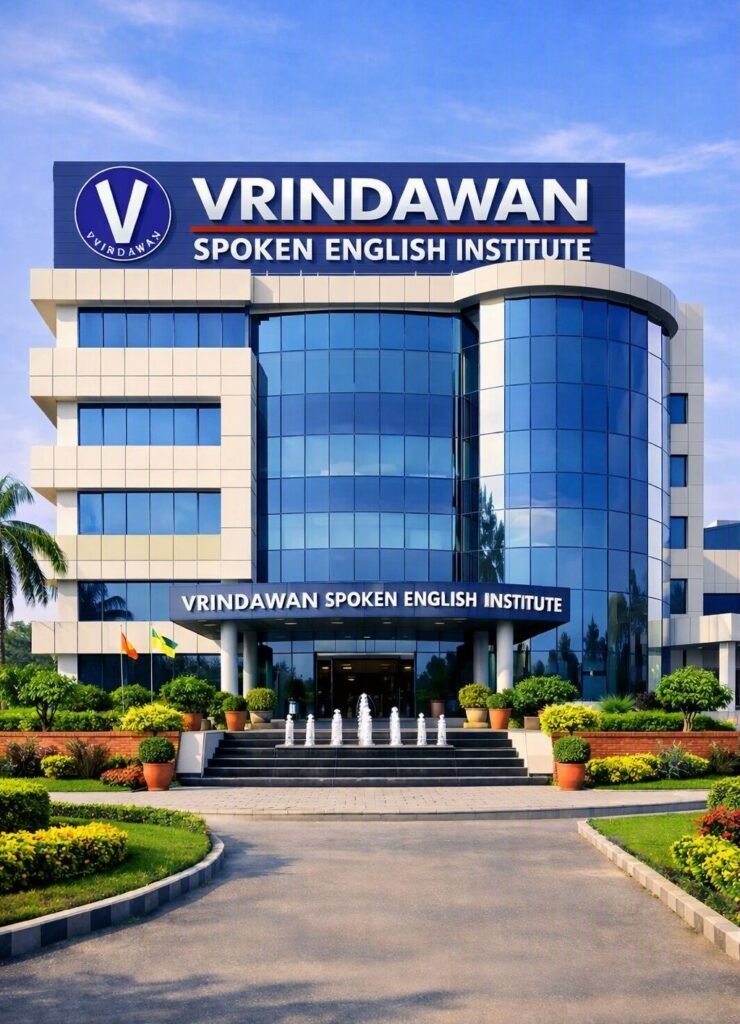
The achievement of ISO 9001:2015 certification in 2021 represented an important milestone for Vrindawan Spoken English Institute, but certification itself was only one part of a much larger organisational journey. The deeper significance of the Quality Management System was the opportunity it created to organise everyday activities in a more systematic manner. For an educational organisation, systematic management can provide a foundation for consistency, accountability and continual improvement.
Before any learner enters a classroom, several activities take place behind the scenes. An enquiry may be received, information about courses may be communicated, learner requirements may be understood, schedules may be planned and responsibilities may be assigned. During training, teachers and staff need to coordinate activities, communicate with learners and respond to changing requirements. After training activities, feedback and records can provide information for further improvement.
When these activities are viewed individually, they may appear simple. However, when an organisation operates across multiple locations, coordination becomes increasingly important. Vrindawan Spoken English Institute had locations at Asaoti in Haryana, Nallasopara East in Maharashtra and Warsaliganj in Bihar. A structured approach could therefore help connect the activities of different centres under a common quality philosophy.
The Quality Management System provided a framework for this approach.
One of the important changes associated with systematic management is the clarification of responsibilities. In any educational institution, different people may perform different functions. Trainers concentrate on teaching and learner interaction. Administrative personnel may manage records, enquiries and communication. Management may focus on planning, resources, objectives and organisational development.
When responsibilities are clearly understood, employees can work with greater coordination. It can also become easier for management to identify where an activity is working effectively and where additional attention may be necessary.
For the promoter of Vrindawan Spoken English Institute, this meant looking at the organisation as a collection of connected processes rather than simply a group of classrooms.
The learner journey itself could be viewed as a process.
A prospective student first becomes aware of the institute. The student then seeks information, communicates with the organisation, decides whether to participate and begins training. During the programme, the learner interacts with teachers and staff, receives educational support and develops through practice. Feedback can then provide information about the experience.
Each stage contributes to the overall perception of quality.
A systematic organisation attempts to understand these connections. If communication at the enquiry stage is unclear, the learner’s expectations may not be properly established. If scheduling is poorly coordinated, the learning experience may be affected. If feedback is not considered, opportunities for improvement may be missed.
Therefore, quality management encourages organisations to look beyond individual activities and examine how processes interact.
Documentation can also support this approach. As organisations develop, relying exclusively on verbal instructions can become difficult. People may change responsibilities, new employees may join, or different locations may develop different working habits. Documented processes can help maintain organisational knowledge and provide a common reference point.
For Vrindawan Spoken English Institute, documentation associated with its Quality Management System could help support consistency in relevant activities. It could provide management and staff with a clearer understanding of processes, responsibilities and expectations.
The purpose of documentation, however, is not simply to create paperwork. Effective documentation should support the organisation rather than become an unnecessary administrative burden. When properly designed, it can help employees understand what needs to be done and provide evidence that important activities have been considered.
Another important element of systematic management is monitoring.
An organisation cannot improve what it never reviews. Management can examine information from learner feedback, internal observations, process performance and other relevant sources to understand whether activities are achieving their intended objectives.
For an institute focused on spoken English, monitoring can be particularly useful because learning requirements may vary considerably between students. One learner may need more conversational practice, another may require grammar support, while another may primarily need confidence-building opportunities.
Understanding these differences can help the organisation remain learner-focused.
The promoter’s role becomes important in creating an environment where employees feel responsible for quality. A Quality Management System works best when quality is not considered the responsibility of one person or one department. Trainers, administrative staff and management can all contribute to maintaining and improving processes.
Leadership can establish objectives and encourage communication. Employees can identify practical challenges. Trainers can provide observations from the classroom. Learners can provide feedback based on their experiences.
Together, these inputs can create a continuous flow of information.
For an organisation with centres in three different states, this approach can also help create a common identity. While local circumstances may differ, common quality principles can provide a shared foundation.
The Asaoti centre in Haryana, the Nallasopara East centre in Maharashtra and the Warsaliganj centre in Bihar each exist within different communities. Learners may have different backgrounds and motivations, but the organisation can still work toward consistent standards of professionalism, communication and service.
This balance between standardisation and local responsiveness is an important part of organisational growth.
Standardisation does not mean that every learner must be treated identically. Instead, it means that the organisation can establish reliable processes while remaining responsive to individual requirements.
The ISO 9001:2015 certification therefore became an opportunity for Vrindawan Spoken English Institute to strengthen its internal structure. It encouraged management to consider how activities were connected, how responsibilities were defined and how information could be used for improvement.
For the promoter, this represented a shift from simply managing daily operations toward building systems that could support longer-term development.
Growth becomes more sustainable when an organisation has processes capable of supporting increasing responsibilities. A business or educational institute may begin with a small team, but as activities expand, informal methods may no longer be sufficient. Systems provide continuity.
The quality journey helped establish this way of thinking.
The objective was not to create a rigid organisation. Rather, it was to create a disciplined organisation that could respond effectively to learner needs while maintaining clarity in its operations.
Through the Quality Management System, Vrindawan Spoken English Institute could connect its educational purpose with structured management. The certification period beginning in 2021 became an important stage in this transformation.
The institute’s story therefore moved from having a vision to building the systems necessary to support that vision. Quality became connected with responsibilities, documentation, communication, monitoring and improvement.
This foundation would become increasingly important as the institute continued developing its services and maintaining its presence across Asaoti, Nallasopara East and Warsaliganj.
The lesson of this chapter is simple: organisational growth is strengthened when vision is supported by systems. For Vrindawan Spoken English Institute, ISO 9001:2015 provided a framework through which the organisation could continue building those systems while keeping learners and the quality of educational service at the centre of its development.
#ISO9001Certification
Chapter 4 – Strengthening the Learning Experience
For Vrindawan Spoken English Institute, the true purpose of a Quality Management System was connected to the people who entered its centres with the desire to learn, communicate and develop. Behind every process, document, review and quality objective was a learner expecting a useful educational experience. Therefore, after the ISO 9001:2015 certification milestone in 2021, strengthening the learning experience became an important part of the institute’s broader quality journey.
Spoken English education is different from many conventional forms of classroom learning because communication requires active participation. A learner cannot develop speaking confidence merely by reading information. Practice, interaction, listening, vocabulary development, sentence formation and regular communication all contribute to the learning process.
Students also arrive with different backgrounds. Some may have studied English for many years but still hesitate while speaking. Others may have limited exposure to spoken English and need to begin with basic communication. Some learners may primarily seek improvement for employment, while others may want better communication for education, interviews, business or everyday life.
Understanding these differences is an important part of providing learner-focused services.
The Quality Management System gave Vrindawan Spoken English Institute a structured way to consider learner requirements. Instead of looking at training only as the delivery of lessons, the organisation could consider the complete learner experience—from the first enquiry to participation, interaction, feedback and continuing improvement.
The first interaction with a learner can be particularly important. Clear communication about the institute, training programme, expectations and learning process helps establish a foundation of understanding. When learners know what they are joining and what they can reasonably expect, communication between the learner and institution becomes more effective.
Once learners begin training, teachers become central to the experience. A spoken English trainer does more than explain grammar. The trainer can encourage participation, create opportunities for conversation, correct mistakes constructively and help students overcome hesitation.
For this reason, people involved in delivering the service are an essential part of quality.
A systematic organisation can support trainers by defining responsibilities and creating clear processes. It can also encourage communication between trainers and management so that practical classroom observations are not lost.
For example, if several learners repeatedly struggle with a particular area of English, trainers can communicate this observation to management. The organisation can then consider whether additional learning materials, practice activities or explanations may be useful.
This is where feedback becomes an important component of quality management.
Feedback should not be viewed simply as a formality. It can provide information about how learners experience the service. A student may appreciate a particular teaching method. Another learner may suggest additional speaking practice. Someone else may identify an issue with communication or scheduling.
Each piece of feedback can provide an opportunity to learn.
For Vrindawan Spoken English Institute, a culture of listening could support continual improvement. The organisation could examine feedback, identify recurring issues and consider appropriate corrective or improvement actions.
This process also creates a connection between quality management and learner confidence.
A student who feels heard may be more comfortable communicating difficulties. In language education, this can be especially valuable because learners frequently make mistakes while developing their skills. An environment that treats mistakes as part of learning can encourage participation.
The physical and organisational environment also contributes to the learning experience. Clear communication, organised schedules and dependable administrative support can reduce unnecessary distractions and allow learners to concentrate on their educational objectives.
Because Vrindawan Spoken English Institute had locations in Asaoti, Haryana; Nallasopara East, Maharashtra; and Warsaliganj, Bihar, consistency in service became an important consideration.
A learner visiting one centre should encounter an organisation guided by the same basic commitment to quality even though local circumstances may differ. Common processes and responsibilities can help create that consistency.
At the same time, the organisation needs to recognise that different communities may have different learner requirements. A centre in Asaoti may interact with learners whose needs differ from those attending the Nallasopara East or Warsaliganj locations.
Quality therefore does not necessarily mean providing exactly the same experience to every person. It means having a reliable system for understanding requirements and responding appropriately.
The promoter’s role was significant in creating this balance.
Leadership can establish the expectation that learners should remain central to organisational decisions. When management communicates this principle clearly, employees are more likely to understand why processes matter.
For example, maintaining learner records is not merely an administrative task. Accurate information can support communication and help the organisation understand its learners. Similarly, collecting feedback is not simply paperwork; it can provide information for improvement.
This way of thinking transforms routine activities into components of a larger quality system.
The ISO 9001:2015 certification also encouraged the institute to consider continual improvement rather than assuming that an established process would always remain effective.
Education changes continuously. Learner expectations evolve. Communication technologies change. Employment requirements change. Teaching approaches develop. Organisations therefore need to remain open to learning and adaptation.
For a spoken English institute, this may mean reviewing learning materials, improving communication methods, encouraging practical speaking activities or strengthening learner support.
The objective is not to change everything constantly. Instead, improvement should be purposeful and based on relevant information.
For Vrindawan Spoken English Institute, the Quality Management System created a framework through which these considerations could become part of organisational thinking.
The certification obtained in 2021 became a milestone, but the more meaningful journey was the continued effort to connect quality principles with everyday educational services.
The promoter and team could therefore view the institute not simply as a place where English classes were conducted, but as an organisation responsible for creating a structured learning experience.
Every learner interaction became an opportunity to demonstrate professionalism. Every feedback point could become an opportunity to improve. Every process could be reviewed for greater clarity and effectiveness.
This learner-focused approach helped connect the institute’s quality objectives with its fundamental purpose.
The ultimate measure of an educational organisation’s value lies in the people it serves. When learners receive structured support, clear communication and opportunities to practise and improve, the institution can contribute to their personal and professional development.
For Vrindawan Spoken English Institute, the ISO 9001:2015 journey therefore represented an opportunity to strengthen not only organisational processes but also the systems surrounding the learner experience.
The chapter of quality that began in 2021 was consequently about more than certification. It was about creating an organisational culture in which teaching, communication, feedback and continual improvement could work together.
That culture provided an important foundation for the institute’s continuing development and for the promoter’s vision of building a more organised, learner-focused and quality-conscious educational institution.
#QualityManagementSystem
Chapter 5 – The Promoter’s Role in Growth
Every organisation’s development is influenced by the vision and leadership of the people who guide it. In the case of Vrindawan Spoken English Institute, the promoter’s role can be understood as an important part of the institute’s journey toward structured management and quality-focused growth. Establishing an educational organisation requires more than creating training programmes. It requires planning, decision-making, people management, learner understanding and a willingness to improve continuously.
The journey toward ISO 9001:2015 certification in 2021 provided an opportunity for leadership to examine these responsibilities from a quality-management perspective. The certification was associated with the institute’s Quality Management System and, according to the information provided, remained valid through 2024. For the promoter, this milestone represented an opportunity to bring greater structure to the organisation’s activities.
Leadership is particularly important in education because the quality of a learning service depends on many people working together. Trainers interact directly with students, administrative personnel support communication and records, and management establishes direction and objectives. If these activities are not coordinated, even a well-designed educational programme can face operational difficulties.
The promoter therefore has an important role in creating clarity.
A clear organisational vision helps employees understand why the institute exists and what it aims to achieve. In the case of Vrindawan Spoken English Institute, the central purpose is connected with spoken English education and communication development. This purpose can provide a common direction for trainers and staff.
The Quality Management System added another dimension to that vision: a commitment to systematic processes and continual improvement.
Instead of considering quality as the responsibility of one department, leadership can communicate that every employee contributes to the learner experience. A trainer contributes through teaching and learner interaction. Administrative staff contribute through accurate communication and coordination. Management contributes through planning, monitoring and resource decisions.
This shared responsibility can create stronger organisational ownership.
For the promoter, implementing a quality system also means paying attention to processes that may not always be visible to learners. These include internal communication, documentation, review activities, responsibilities and corrective actions. Although such activities may appear administrative, they can influence the organisation’s ability to deliver services consistently.
Leadership can also encourage employees to identify problems without fear of unnecessary blame. When employees are comfortable reporting difficulties, management receives information that can be used for improvement.
For example, a trainer may identify that learners need additional practice in a particular area. An administrative employee may notice that a communication process creates confusion. Management can then review the issue and determine whether an improvement is appropriate.
This creates a cycle of learning within the organisation.
The promoter’s role also becomes important when an institution operates across multiple locations. Vrindawan Spoken English Institute has the stated locations at Asaoti in Haryana, Nallasopara East in Maharashtra and Warsaliganj in Bihar. Managing activities across these locations requires coordination and a shared understanding of organisational expectations.
Each centre may serve a different community, but common quality principles can help maintain organisational consistency.
Leadership can establish common expectations while allowing local teams to respond to the practical requirements of their learners. This balance is important because standardisation should support quality without preventing appropriate local responsiveness.
The promoter can also influence organisational culture through personal example. When leadership demonstrates attention to punctuality, communication, documentation, learner requirements and continual improvement, employees are more likely to recognise these activities as genuine organisational priorities.
A quality culture cannot be created only through written procedures. It develops through repeated behaviour.
The ISO 9001:2015 framework provided the institute with a recognised structure for this approach. However, the effectiveness of that framework depended on how it was integrated into daily activities.
The promoter’s responsibility was therefore not simply to obtain certification but to support the system behind it.
This distinction is important. A certificate represents a point of achievement, while a Quality Management System is an ongoing process. It requires review, monitoring and improvement. Leadership must remain engaged if quality objectives are to remain meaningful.
For an educational organisation, this can involve asking practical questions.
Are learner requirements being understood? Are responsibilities clear? Are communication channels effective? Are feedback points being considered? Are recurring issues being addressed? Are employees receiving appropriate support? Are processes still suitable as the organisation develops?
These questions help leadership move from reactive management toward continual improvement.
The promoter can also play a role in planning future development. Growth may involve improving existing services, strengthening operations, developing staff capabilities or reaching new learner communities. Whatever direction the organisation takes, quality considerations can be incorporated into planning.
This approach can help ensure that expansion does not occur without the necessary organisational foundation.
For Vrindawan Spoken English Institute, the presence of three locations already demonstrates the importance of organisational coordination. The Asaoti centre, the Nallasopara East centre and the Warsaliganj centre each represent opportunities to serve learners in their respective communities.
Leadership must therefore think beyond the performance of an individual centre and consider the organisation as a connected system.
The ISO 9001:2015 certification journey provided a framework for developing this perspective. It encouraged management to consider processes, interested parties, responsibilities, risks, feedback and continual improvement as interconnected elements of organisational performance.
For the promoter, this could become a valuable management lesson: sustainable growth requires systems.
An organisation may have motivated teachers and strong educational intentions, but as activities increase, systems become increasingly important. Clear processes can help people work together. Defined responsibilities can reduce uncertainty. Feedback can identify opportunities for improvement. Documentation can preserve organisational knowledge. Management review can support informed decisions.
These elements create organisational discipline.
The promoter’s contribution to the institute’s development can therefore be viewed not simply in terms of daily administration, but in terms of building an environment where people can perform their responsibilities effectively.
The story of Vrindawan Spoken English Institute after its ISO 9001:2015 certification is consequently also a story of leadership development. The certification provided a framework, but leadership provided the direction required to make that framework meaningful.
As the institute continued serving learners across Haryana, Maharashtra and Bihar, the promoter’s vision could increasingly focus on connecting education with quality management.
The objective was not merely to become a certified organisation. It was to become a more organised institution capable of learning from experience and improving its services.
This leadership-oriented approach formed an important foundation for the institute’s continuing journey. By combining educational purpose with systematic management, Vrindawan Spoken English Institute could pursue growth while keeping quality, learner requirements and continual improvement at the centre of its organisational thinking.
#SpokenEnglishInstitute
Chapter 6 – Expanding Through Multiple Locations
The development of Vrindawan Spoken English Institute can also be understood through its presence across different geographical locations. The institute’s stated addresses in Asaoti, Haryana; Nallasopara East, Maharashtra; and Warsaliganj, Bihar represent more than three physical locations. Together, they illustrate the importance of creating consistent educational processes while remaining connected to the needs of individual communities.
When an educational organisation operates from a single location, management can often communicate directly with teachers, administrative staff and learners on a regular basis. As the organisation develops activities across different locations, coordination becomes increasingly important. Differences in communication, documentation, scheduling and responsibilities can influence the overall learner experience.
The introduction of a Quality Management System therefore became particularly relevant to the institute’s multi-location structure.
The ISO 9001:2015 certification obtained in 2021 provided a framework through which the organisation could think about consistency and process management. According to the information supplied, the certificate was valid through 2024. During this period, the Quality Management System could support the organisation’s efforts to establish common principles across its different centres.
The Asaoti location is situated at Vrindawan House, opposite Platform No. 5, Railway Colony, Asaoti, District Palwal, Haryana – 121102. A railway-colony environment can bring together people from varied backgrounds, including families, students and working professionals. An institute offering spoken English education in such a community can provide access to communication training close to where people live and work.
The second stated location is Vrindawan House, Ganesh Nagar, Dhaniv Bag, Nallasopara East, District Palghar, Maharashtra – 401209. Nallasopara East is part of a large and diverse urban and residential environment. Learners in such communities may have different motivations for improving English, including employment, education, interviews, workplace communication and personal confidence.
The third location is Vrindawan House, opposite National School, By-pass Road, SH-83, Warsaliganj, District Nawada, Bihar – 805130. This location extends the institute’s educational presence into another region and creates an opportunity to serve learners who may seek language development within their local community.
Although the communities differ, the basic requirement for a structured educational service remains the same.
Learners expect clear information, professional interaction and a learning environment that supports their objectives. Maintaining these expectations across different locations requires organisational discipline.
This is where standardisation becomes valuable.
Standardisation does not mean that every centre must operate in exactly the same way regardless of local circumstances. Instead, it means establishing common processes and principles that provide a foundation for service quality.
For example, an organisation can establish common expectations for learner communication while allowing individual centres to respond to local requirements. Similarly, management can maintain common approaches to documentation and feedback while allowing trainers to adapt classroom activities according to learner needs.
This balance between consistency and flexibility is an important feature of organisational growth.
The promoter and management team therefore had to consider both central coordination and local implementation. Communication between different locations could help management understand challenges and identify practices that may be useful across the organisation.
If one centre developed an effective approach to learner interaction, for example, management could consider whether that practice might be useful elsewhere. Likewise, if a recurring problem appeared at one location, it could become an opportunity to review whether similar risks existed at other centres.
The Quality Management System could support this exchange of information.
Feedback also became important in a multi-location environment. Each centre could receive observations from learners and staff. When these observations are reviewed systematically, management can develop a broader understanding of organisational performance.
Instead of treating each location as an independent unit, the institute could view the three centres as parts of one organisation.
This perspective also strengthened the importance of the promoter’s leadership role. Leadership had to establish common objectives while understanding that each centre operated within its own local environment.
Employees could contribute to this process by maintaining communication and sharing information. Trainers could communicate learner requirements. Administrative staff could identify process challenges. Management could review the information and determine appropriate actions.
Such collaboration can create a stronger organisational identity.
The institute’s multiple locations also demonstrate how spoken English education can be connected with local development. People do not always have the opportunity or resources to travel to large educational centres for every skill-development requirement. Local institutions can provide accessible learning opportunities within their communities.
For learners, proximity can make regular participation more practical. For the organisation, however, geographical expansion also creates responsibility. Maintaining quality across locations becomes essential.
The ISO 9001:2015 framework provided an opportunity to approach this responsibility systematically.
Processes could be reviewed. Responsibilities could be clarified. Feedback could be collected. Management could monitor relevant activities and identify opportunities for improvement.
The objective was not simply to maintain three addresses. It was to create an organisation capable of delivering its educational purpose through a structured system.
The period following certification therefore became a period in which the institute could strengthen coordination between its different locations.
The Asaoti centre represented the institute’s presence in Haryana. Nallasopara East represented its presence in Maharashtra. Warsaliganj represented its presence in Bihar. Each location had its own community, but all could remain connected through the organisation’s common commitment to spoken English education and quality management.
For the promoter, this multi-location journey could also provide valuable organisational learning. Managing different centres requires patience, communication and the ability to identify common requirements without ignoring local differences.
It demonstrates that growth is not simply about reaching more places. Growth also involves developing the systems necessary to support those places.
The institute’s ISO 9001:2015 journey therefore became particularly relevant to its geographical structure. A recognised Quality Management System provided a framework for consistency, process control and continual improvement across organisational activities.
As the institute continued its journey, the challenge was to ensure that growth remained connected with quality.
The three locations represented opportunities, but the organisation’s long-term strength depended on how effectively it could coordinate them.
This chapter of Vrindawan Spoken English Institute’s story therefore highlights an important lesson: expansion becomes more sustainable when it is supported by systematic processes. By combining local accessibility with common quality principles, the institute could continue developing its presence while keeping learner requirements and organisational improvement at the centre of its work.
#EnglishLanguageTraining
Chapter 7 – Continuous Improvement as a Culture
The journey of Vrindawan Spoken English Institute after its ISO 9001:2015 certification was not simply about establishing processes and maintaining documentation. One of the most important ideas associated with quality management is continual improvement. For an educational organisation, this principle can become a powerful part of organisational culture because learning itself is a continuous process.
The institute’s ISO 9001:2015 certification was issued in 2021 and, according to the information provided, remained valid through 2024. During this period, the Quality Management System provided a framework through which management could review activities, understand learner requirements and identify opportunities for improvement.
Continuous improvement begins with a simple understanding: an organisation can always learn from its experience.
A process that works effectively today may need adjustment tomorrow. Learner expectations can change. Teaching methods can develop. Communication technologies can evolve. Staff responsibilities can change as an organisation grows. Even a well-established procedure may become less effective when circumstances change.
For Vrindawan Spoken English Institute, this was particularly relevant because spoken English education is closely connected with changing communication requirements.
Learners may want English skills for interviews, employment, higher education, workplace communication, business interaction or personal confidence. Their expectations can vary according to age, educational background and professional objectives.
A quality-focused institute therefore needs to remain attentive to what learners require.
Feedback provides one of the most direct ways to understand these requirements. Learners can provide information about their classroom experience, communication with staff, course-related expectations and areas where they need additional support.
When feedback is collected and reviewed systematically, it becomes more than a collection of comments. It becomes information that management can use to make decisions.
For example, if several learners identify difficulty with conversational practice, the organisation can examine whether additional speaking activities may be appropriate. If students frequently request clarification about course information, management can review how information is communicated. If trainers identify recurring learning challenges, the organisation can consider whether teaching resources or methods should be strengthened.
The purpose is not to react to every individual suggestion automatically. Instead, management can examine information, identify patterns and determine which improvements are relevant.
This creates a structured approach to learning from experience.
Employees also play an important role in continuous improvement. Trainers spend considerable time interacting directly with learners, which means they can observe practical challenges that may not be visible to management.
A trainer may notice that learners are hesitant to participate in group discussions. Another may observe that certain exercises generate stronger engagement. Administrative staff may identify communication delays or recurring questions from learners.
When employees are encouraged to communicate these observations, the organisation gains access to valuable practical knowledge.
This is where leadership becomes important.
A culture of continual improvement requires management to create an environment in which people are encouraged to identify opportunities for better performance. Improvement should not be viewed only as a response to failure. It can also arise from successful practices that can be strengthened or extended.
For the promoter of Vrindawan Spoken English Institute, this approach can create a more forward-looking management culture.
Instead of asking only, “Is the process working?” management can also ask, “Can this process work better?”
That question can lead to meaningful organisational development.
The Quality Management System can support this thinking through processes such as monitoring, review and corrective action. When an issue is identified, the organisation can examine its cause and determine what action may prevent recurrence.
This is particularly useful because solving only the visible symptom may not address the underlying problem.
For example, if communication with learners is repeatedly delayed, simply responding to one delayed message may not solve the broader issue. Management may need to examine how enquiries are received, assigned and followed up. A process-based approach encourages attention to the system rather than only the individual incident.
Continuous improvement therefore becomes connected with prevention as well as correction.
The institute’s multi-location structure makes this approach even more valuable. With centres in Asaoti, Nallasopara East and Warsaliganj, lessons learned at one location may provide useful information for another.
Suppose one centre develops a particularly effective approach to learner communication. Management can review the practice and determine whether it could be adapted elsewhere. Similarly, if a recurring administrative issue is identified at one location, management can examine whether the same risk exists across the organisation.
This creates organisational learning.
The institute can therefore become more than a collection of individual centres. It can become a connected organisation in which knowledge moves between locations.
Documentation also supports this process. When improvements are introduced and important practices are documented, organisational knowledge becomes easier to preserve. This is particularly valuable as employees and responsibilities change over time.
For a growing educational institution, retaining knowledge can reduce dependence on individual memory.
Continuous improvement can also influence the relationship between management and employees. When employees see that their observations lead to meaningful consideration, they may become more engaged with organisational objectives.
This does not mean that every suggestion must be implemented. Good management requires evaluation and prioritisation. However, creating channels through which people can contribute can strengthen organisational participation.
The promoter’s role is again important because leadership establishes the tone of the organisation.
If management treats improvement as a genuine priority, employees are more likely to take it seriously. If management views quality only as documentation, the system may become disconnected from everyday work.
For Vrindawan Spoken English Institute, the certification journey therefore provided an opportunity to develop quality as part of organisational culture rather than treating it as a one-time event.
The certificate itself represented a milestone in 2021. The continuing challenge was to maintain the principles behind the Quality Management System throughout the stated certification period.
This meant reviewing activities, listening to learners, supporting employees and remaining open to change.
Continuous improvement also aligns naturally with the educational mission of the institute. The organisation exists to help learners develop. At the same time, the organisation itself must also be willing to develop.
There is a useful parallel between the two.
A learner improves by practising, receiving feedback, identifying weaknesses and making adjustments. An organisation can follow a similar process. It performs an activity, receives information, evaluates the result and introduces improvements.
In this sense, the Quality Management System can be seen as an organisational learning mechanism.
The institute’s journey demonstrates that quality does not have to be understood as perfection. Instead, quality can be understood as a commitment to doing work systematically and looking for appropriate ways to improve it.
For Vrindawan Spoken English Institute, this mindset could support stronger processes, better communication and a more responsive learning environment across its locations.
The chapter of continuous improvement therefore became an important part of the institute’s growth story. The ISO 9001:2015 certification provided the framework, but the real value came from using that framework to encourage learning and development.
As the institute continued serving learners in Haryana, Maharashtra and Bihar, the principle remained relevant: every experience could provide information, every challenge could reveal an opportunity and every improvement could contribute to a stronger organisation.
That philosophy helped connect quality management with the institute’s larger educational purpose—creating an organisation that, like its learners, continued to learn, adapt and grow.
#QualityEducation
Chapter 8 – Building Trust Through Quality and Consistency
For an educational organisation, growth is not measured only by the number of learners who enter its classrooms. Growth is also reflected in the level of trust that develops between the institution, learners, trainers, staff and the wider community. Trust is built gradually through consistent experiences, transparent communication and a visible commitment to quality.
For Vrindawan Spoken English Institute, the development of a Quality Management System and the achievement of ISO 9001:2015 certification in 2021 represented an important step toward strengthening this culture of consistency. The certification, which according to the information provided was valid through 2024, became part of the institute’s broader journey toward organised and systematic management.
The importance of consistency becomes particularly clear when an organisation operates from multiple locations.
Vrindawan Spoken English Institute has locations at Asaoti in Haryana, Nallasopara East in Maharashtra and Warsaliganj in Bihar. Each location serves its own local community and may encounter different learner expectations. At the same time, the organisation needs to maintain a common understanding of quality.
This creates an important management challenge.
A learner should be able to experience the institute’s commitment to organised service regardless of which location they interact with. Local circumstances may differ, but fundamental expectations related to communication, learner support, teaching processes and management should remain connected to the organisation’s quality objectives.
The Quality Management System provides a framework for creating this connection.
Standardisation does not mean that every centre must operate in exactly the same way in every detail. Education involves human interaction, and local needs can naturally differ. Instead, standardisation can provide common principles and processes while allowing appropriate flexibility in implementation.
This balance is important for an organisation such as Vrindawan Spoken English Institute.
For example, learners at one location may have different professional or educational backgrounds from learners at another. Trainers may need to adapt examples, classroom activities or communication styles to suit their learners. However, the underlying commitment to organised learning processes, learner requirements, feedback and improvement can remain consistent.
This approach allows the organisation to combine structure with responsiveness.
Trust also depends heavily on communication.
When learners receive clear information about courses, processes and expectations, uncertainty can be reduced. Clear communication allows learners to understand what the institute provides and what is expected from them. It also gives staff a common basis for responding to questions.
A quality-oriented approach encourages organisations to examine communication processes rather than leaving them entirely dependent on individual habits.
This can be particularly valuable when several people are involved in learner interaction.
A systematic organisation creates greater clarity regarding responsibilities. Staff members understand their roles, information can be communicated through defined channels and management can review whether processes are functioning effectively.
Over time, these practices can contribute to a more dependable learner experience.
Trust is also influenced by how an organisation responds when something does not go according to plan.
No organisation operates without challenges. What distinguishes a mature quality culture is not the assumption that problems will never occur. Instead, it is the willingness to identify issues, understand their causes and take suitable corrective action.
For an educational institute, this could involve reviewing a learner complaint, examining a communication gap, identifying a process weakness or evaluating whether a particular activity is meeting its intended purpose.
A structured response can turn an individual problem into an opportunity for organisational learning.
This connects directly with the principle of continual improvement discussed in the previous chapter. Feedback and problems can provide information, while management review can help determine appropriate action.
The promoter’s leadership is central to maintaining this environment.
When leadership communicates that quality is a shared responsibility, employees are more likely to understand that the Quality Management System is not merely an administrative requirement. It becomes part of how the organisation conducts its daily work.
For Vrindawan Spoken English Institute, this perspective can strengthen the connection between leadership and employees.
Trainers contribute through teaching and learner interaction. Administrative personnel contribute through coordination and communication. Management contributes through planning, monitoring and decision-making. Together, these activities support the overall learning service.
This is an important characteristic of a process-based organisation: individual responsibilities are connected to a larger purpose.
Quality therefore becomes a collective responsibility.
Another important element of trust is organisational continuity. Learners and other stakeholders benefit when processes do not depend entirely on one particular individual. A documented system can help preserve organisational knowledge and provide guidance when responsibilities change.
Documentation can also support consistency between locations.
When important processes are defined, reviewed and maintained, the organisation has a stronger foundation for continuity. Employees can understand expectations more clearly, and management can identify where adjustments may be required.
The ISO 9001:2015 framework provided a structured reference for this type of management.
However, certification should not be viewed as the final destination. A certificate can demonstrate that an organisation has established a management system meeting the relevant requirements at the time of assessment, but maintaining the value of that system depends on how it is used in everyday operations.
For Vrindawan Spoken English Institute, the deeper significance of certification lies in the management practices associated with it.
The institute’s story can therefore be understood as a movement from individual effort toward organisational discipline. The founders and employees may have always been committed to education, but a formal Quality Management System provides additional structure through which that commitment can be organised.
This structure can help transform good intentions into repeatable practices.
As the organisation operates across Haryana, Maharashtra and Bihar, consistency becomes an important part of its identity. Each centre can respond to its local environment while remaining connected to common quality principles.
This creates the possibility of a stronger institutional culture—one in which learners are not simply receiving training, but are interacting with an organisation that values planning, responsibility, feedback and improvement.
The trust created through such practices may not develop overnight. It is built through repeated experiences.
A learner attends a class, communicates with staff, receives support, provides feedback and observes how the institute responds. Each interaction contributes to the overall perception of the organisation.
When these interactions are supported by consistent processes, the foundation for trust becomes stronger.
The journey of Vrindawan Spoken English Institute after its 2021 ISO 9001:2015 certification can therefore be viewed as a story of strengthening organisational confidence through quality management.
The certificate represented an important milestone, but the larger achievement was the opportunity to establish a culture in which quality could become part of everyday thinking.
Through systematic processes, leadership involvement, employee participation, learner feedback and continual improvement, the institute could continue developing its organisational identity.
Ultimately, quality in education is closely connected with trust.
When an institution demonstrates that it understands its responsibilities, monitors its processes and remains willing to improve, it creates a stronger foundation for long-term development.
For Vrindawan Spoken English Institute, this foundation connected its educational mission with a structured approach to management—helping the organisation move forward with greater consistency, awareness and commitment to quality.
#ContinualImprovement
Chapter 9 – Leadership, Learning and the Road Ahead
Every organisation reaches a stage where its future depends not only on what it has already achieved, but on how effectively it can learn from its experience. For Vrindawan Spoken English Institute, the journey associated with ISO 9001:2015 certification can be understood as part of this continuing process of organisational learning.
The certification issued in 2021, with validity stated through 2024, represented an important milestone in the institute’s development. However, the deeper significance of such a milestone lies in the management practices that continue beyond the certificate itself.
Leadership plays a central role in this process.
An educational institution operates through people. Trainers teach learners, administrative staff coordinate activities, management makes decisions and the promoter provides direction. When these different responsibilities are connected by a common understanding of quality, the organisation can function with greater clarity.
For Vrindawan Spoken English Institute, leadership therefore means more than managing day-to-day activities. It means creating an environment in which people understand why quality matters and how their individual responsibilities contribute to the larger purpose of the institute.
The promoter’s role is particularly important in maintaining this direction.
A promoter who focuses on long-term development must look beyond immediate operational requirements. Questions about learner expectations, staff development, process effectiveness, communication and continual improvement become part of strategic thinking.
This creates a culture in which quality is considered before problems become significant.
Leadership also helps connect the different locations of the institute.
Vrindawan Spoken English Institute operates at locations in Asaoti, Haryana; Nallasopara East, Maharashtra; and Warsaliganj, Bihar. These locations serve different communities and may experience different local circumstances. Yet they remain connected through the organisation’s broader approach to quality management.
A strong leadership system can help maintain this connection.
Rather than expecting every location to face challenges independently, management can encourage the sharing of information and experience. An effective practice developed at one centre can become a learning opportunity for another. Similarly, a recurring issue can be examined more broadly to determine whether improvements are needed across the organisation.
This approach transforms individual experience into organisational knowledge.
Organisational learning is particularly important in education because the environment surrounding learners is constantly changing.
The ways people communicate, study and work continue to evolve. Learners may increasingly require English communication skills for employment, interviews, professional interaction, higher education and digital communication.
An institute therefore needs to remain responsive.
Responsiveness does not mean changing everything continuously. Instead, it means monitoring relevant developments and making thoughtful adjustments where necessary.
The Quality Management System can support this process by encouraging organisations to establish processes, monitor results and review performance.
For Vrindawan Spoken English Institute, this creates a cycle of learning.
The institute provides educational services. Learners interact with trainers and staff. Feedback and observations provide information. Management reviews relevant information. Improvements can then be identified and implemented where appropriate.
The cycle continues.
This way of working encourages management to see quality as a living system rather than a fixed set of documents.
Leadership is also connected with employee development.
Trainers and administrative staff are essential to the learner experience. Their understanding of organisational processes can influence how effectively those processes are implemented.
When employees understand their responsibilities and receive appropriate support, they can contribute more effectively to organisational objectives.
Training and awareness therefore become important parts of quality management.
An employee should understand not only what task needs to be performed, but why the task matters. When people understand the relationship between their work and learner satisfaction, process effectiveness and organisational objectives, their role becomes more meaningful.
This can strengthen ownership.
Leadership can further support this ownership by encouraging communication. Employees should have opportunities to raise practical concerns, identify process weaknesses and suggest improvements.
Such communication can help management see issues from different perspectives.
A trainer may understand a classroom challenge in a way that is different from an administrator. An administrative employee may identify a communication issue that is not immediately visible to teaching staff. Management can bring these perspectives together and determine appropriate action.
This collaborative approach strengthens organisational learning.
Another important aspect of leadership maturity is the ability to maintain discipline even when operations become routine.
Over time, organisations can become comfortable with familiar practices. However, routine can sometimes reduce attention to improvement.
A quality-oriented leadership approach encourages periodic review.
Are existing processes still appropriate? Are learner expectations changing? Are responsibilities clear? Are employees receiving the necessary support? Are recurring issues being addressed at their root? Are successful practices being shared?
These questions help prevent stagnation.
For Vrindawan Spoken English Institute, such questions can be particularly relevant because of its multi-location structure. Growth creates opportunities, but it also creates the responsibility to maintain organisational coherence.
The quality management approach provides a framework for balancing these requirements.
The institute’s journey can therefore be viewed as a transition from a primarily activity-based approach toward a more process-oriented and management-focused organisation.
Teaching remains at the heart of the institute, but teaching is supported by many connected processes—planning, communication, learner support, staff responsibilities, monitoring, feedback and improvement.
When these processes work together, the organisation becomes stronger.
The promoter’s development is also connected to this organisational transformation. As the institute grows, leadership responsibilities naturally become broader. The promoter must increasingly think in terms of systems rather than individual activities.
Instead of personally managing every issue, effective leadership creates processes through which employees can perform their responsibilities with clarity.
This is one of the important lessons associated with quality management.
A sustainable organisation cannot depend entirely on the continuous personal intervention of one individual. It needs systems, responsibilities and organisational knowledge that support continuity.
The ISO 9001:2015 journey provided Vrindawan Spoken English Institute with an opportunity to strengthen this perspective.
Looking ahead, the institute’s future development can continue to build upon the principles of quality, learner focus, leadership, process management and continual improvement.
The certification period ending in 2024 should therefore be understood as one phase of a longer organisational journey rather than the conclusion of the story.
The most valuable outcome of a quality journey is not simply the certificate displayed on a wall. It is the organisational thinking developed behind it.
For Vrindawan Spoken English Institute, that thinking can support future decisions, strengthen internal coordination and help maintain attention to learner needs.
The story of the institute is ultimately a story of learning—learning how to organise, how to improve, how to listen and how to lead.
Its experience demonstrates that educational growth and organisational quality can move together.
As the institute looks toward the future, the principles established through its quality journey provide a foundation for continued learning and development. Leadership can continue encouraging employees, processes can continue evolving, and learner feedback can continue informing improvement.
The road ahead therefore remains open.
The certificate marked an important chapter, but the larger journey is the continuous effort to build an organisation that learns from experience and remains committed to delivering its educational purpose with discipline, responsibility and quality.
#EducationalExcellence
Chapter 10 – A Continuing Journey of Quality, Growth and Purpose
Every organisation has a story, but the most meaningful stories are not defined by a single achievement. They are defined by the lessons learned along the way, the challenges that shaped the organisation and the vision that continues to guide its future.
The journey of Vrindawan Spoken English Institute can be understood in this way.
The institute’s development has been connected with the purpose of helping people strengthen their English communication abilities and build greater confidence in their personal, educational and professional lives. Over time, this educational purpose created the need for an organised approach to management, consistency and quality.
The ISO 9001:2015 certification issued in 2021, with validity stated through 2024, became an important milestone in that journey.
The certification was associated with the institute’s Quality Management System. More importantly, the process behind quality management encouraged the organisation to think systematically about how its services were planned, delivered, monitored and improved.
This represented an important shift in perspective.
Quality was no longer only an intention. It could be supported through defined processes, responsibilities, communication, feedback and review.
The importance of this approach became even greater because Vrindawan Spoken English Institute operates across different locations.
The institute has a centre at Asaoti in Haryana, another at Nallasopara East in Maharashtra and another at Warsaliganj in Bihar. These locations are separated geographically and serve their respective communities, yet they remain connected through the broader identity of the organisation.
Operating across different regions creates both opportunities and responsibilities.
The opportunity is to reach learners from different backgrounds and communities. The responsibility is to maintain an organised approach to quality while remaining responsive to local needs.
The Quality Management System provided a framework for addressing this challenge.
A common quality philosophy can help connect different locations. Processes can provide direction, responsibilities can be clarified, feedback can be reviewed and improvements can be shared.
At the same time, education remains a human activity. Trainers need to understand their learners, communicate effectively and adapt teaching approaches to different circumstances.
The combination of structure and flexibility is therefore important.
The institute’s journey also demonstrates the importance of leadership.
The promoter’s contribution is not limited to establishing the organisation. Leadership involves defining direction, encouraging employees, understanding learner expectations and ensuring that quality remains part of organisational thinking.
As an organisation develops, leadership must increasingly move from individual supervision toward system-based management.
This is where the principles of ISO 9001:2015 can become meaningful.
A quality management system encourages an organisation to look at processes rather than isolated activities. It encourages attention to customers, monitoring, improvement and evidence-based decision-making.
For an educational institution, the learner becomes an important focus of this process.
Learner requirements can vary significantly. Some learners may be preparing for employment, while others may want to improve their communication for professional or personal reasons. Some may require greater speaking practice, while others may need help developing confidence and everyday communication.
Understanding these differences is essential to creating a meaningful educational experience.
Feedback can therefore become an important source of information.
When learners communicate their experiences, the institute has an opportunity to understand what is working effectively and where improvements may be appropriate. Staff observations can provide another source of information.
Together, these inputs can support continual improvement.
This is perhaps one of the most important lessons from the institute’s quality journey.
Quality is not a destination.
There is no final point at which an organisation can permanently declare that every process is perfect. Learner needs change, technology develops, employees change roles and organisational circumstances evolve.
A quality-focused organisation must therefore remain willing to learn.
For Vrindawan Spoken English Institute, continual improvement can remain connected with its educational mission. The same principle that encourages a learner to practise and improve can also guide the organisation itself.
A learner identifies an area for improvement, practises and receives feedback.
An organisation identifies an opportunity, reviews information, introduces an improvement and evaluates the result.
Both processes are based on learning.
This connection gives the institute’s quality journey a deeper meaning.
The value of ISO certification should therefore not be viewed only through the certificate itself. The certificate represents recognition of a management system at a particular point in time. The long-term value comes from how an organisation applies the principles of quality in everyday operations.
For Vrindawan Spoken English Institute, the journey created an opportunity to strengthen organisational discipline, improve process awareness and connect different areas of activity under a common quality framework.
It also created greater awareness of the importance of documentation and organisational knowledge.
In a growing institution, knowledge should not remain only with individual employees. Important processes and responsibilities need to be understood and maintained so that the organisation can continue operating effectively even as people and circumstances change.
This is especially important across multiple locations.
The institute’s journey also highlights the connection between quality and trust.
Learners and other stakeholders develop confidence through repeated experiences. Clear communication, organised processes, responsible staff and attention to feedback can all contribute to that confidence.
Trust is not created by a certificate alone. It is built through everyday actions.
That is why the real story behind certification is often the organisational transformation that accompanies it.
The journey of Vrindawan Spoken English Institute reflects this broader idea.
From the beginning, the institute’s purpose has been connected with education and communication. The development of a formal Quality Management System added a structured management dimension to that purpose. Leadership, employee participation, learner focus, documentation, monitoring and continual improvement became connected elements of the organisation’s approach.
The 2021 certification milestone therefore became one chapter in a much larger story.
The stated certification validity through 2024 marks a specific period, but the principles associated with quality management can continue to inform organisational thinking beyond that period.
The future of the institute will depend on how effectively it continues to learn, adapt and respond to the people it serves.
Its three-location presence provides a foundation for wider engagement, while its quality-oriented approach provides a framework for maintaining organisational discipline.
The promoter’s vision, the contribution of trainers and employees, and the expectations of learners all come together within this journey.
Ultimately, the growth of Vrindawan Spoken English Institute is not only about expanding educational activities. It is about developing an organisation capable of supporting learners through a structured, responsible and improvement-oriented approach.
The story therefore ends with a beginning rather than a conclusion.
The certificate was a milestone.
The Quality Management System was a framework.
The learners were the central purpose.
The promoter’s leadership provided direction.
The employees helped turn processes into daily practice.
And continual improvement became the path forward.
As Vrindawan Spoken English Institute continues its journey, the most valuable lesson remains simple: quality is created through consistent effort.
Every learner interaction, every training session, every review, every improvement and every leadership decision contributes to the organisation’s continuing development.
The journey from vision to structured quality management demonstrates how an educational institution can strengthen itself by learning from experience and building systems around its purpose.
For Vrindawan Spoken English Institute, the story of ISO 9001:2015 is therefore not simply a story about certification.
It is a story about organisation, responsibility, learning, leadership and commitment.
And above all, it is a story of an educational institution continuing to move forward with the belief that better processes can support better experiences—and that continual learning can create the foundation for continual growth.
#QualityManagement
#EnglishCommunicationSkills #ProfessionalEnglishTraining #LanguageLearning #EducationalGrowth #LearningAndDevelopment
Take the Next Step Today
Don’t wait to enhance your business’s quality and efficiency. Partner with Mayu Group Global and experience the transformation that comes with expert consultancy and training. Contact us today to learn more about how we can help you achieve your business goals. Reach out via phone at
+91-9322728183, visit our website at www.mayugroup.com, or email us at investor@mayugroup.com Let us be your guide on the journey to excellence and innovation.